

Supplier Self-Audit Checklist: What to Confirm Before You Commit to an Order
A structured checklist for evaluating a supplier on your own, before you ever request a paid third-party audit or inspection.
- 1. What Do the Key Terms Mean?
- 2. What Should a Supplier Self-Audit Cover?
- 3. How Many References Should You Actually Contact?
- 4. What Questions Reveal the Most About a Supplier During a Self-Audit?
- 5. Should You Request a Video Walkthrough If You Can't Visit in Person?
- 6. How Does a Self-Audit Differ From a Paid Third-Party Audit?
- 7. What's a Reasonable Timeline for a Self-Audit?
- 8. Does a Long Operating History Substitute for a Self-Audit?
- 9. How Does XingYi Trading Support a Buyer's Self-Audit?
- 10. Should You Score or Rank Suppliers Numerically During a Self-Audit?
- 11. What's a Common Mistake Buyers Make During a Self-Audit?
- 12. How Do You Balance Thoroughness Against Moving Too Slowly?
- 13. Which Certification Schemes Count as GFSI-Recognised?
- 14. What Can Public Trade Data Tell You About a Volume Claim?
- 15. What Benchmarks Can You Compare a Test Certificate Against?
- 16. What Does a Simple Scoring Sheet Look Like?
- 17. Start Your Own Supplier Self-Audit
Before paying for a formal third-party audit or inspection, most buyers run their own structured review of a supplier — a self-audit. This is a checklist for doing that systematically rather than relying on impressions from a single email exchange.
What Do the Key Terms Mean?
A self-audit is a structured review of a supplier that the buyer carries out from documents, references and conversation, without paying an outside auditor.
A GFSI-recognised scheme is a food safety certification programme that has been benchmarked against GFSI's requirements; GFSI itself does not certify companies.
A corrective action is the documented fix a supplier applies after a quality or safety deviation, and asking to see one is a good test of how a supplier really works.
What Should a Supplier Self-Audit Cover?

- •Business registration and licenses — ask for documentation, don't just take a verbal claim
- •Production capacity and equipment — does what they describe match what a facility their size could realistically produce?
- •Food safety certifications held, and copies of the actual certificates — check them against a GFSI-recognized scheme like BRCGS, SQF, or FSSC 22000 rather than an unfamiliar private certification
- •Client references you can independently contact, not just testimonials on their own site
- •Documented history of past third-party audits or regulatory inspections, including how any past issues were resolved
How Many References Should You Actually Contact?
More than one — a supplier who can only provide a single reference, or hesitates when asked for more, is worth a closer look. Where possible, contact a reference buying a similar volume or shipping to a similar destination market, since their experience will be more directly comparable to what you can expect.
What Questions Reveal the Most About a Supplier During a Self-Audit?
Questions that require a specific, verifiable answer rather than a general reassurance: exact daily/annual production capacity, which specific food safety certifications they hold (not "we follow international standards"), and how they'd handle a documented quality deviation on a real order. Vague answers to specific questions are a more reliable warning sign than any single red flag on its own.
Should You Request a Video Walkthrough If You Can't Visit in Person?
Yes — a live video walkthrough of the facility, where you can ask the supplier to show specific areas in real time, is a meaningful step up from photos alone (which can be selectively taken or dated) and doesn't require travel. This is a reasonable middle ground between fully trusting a supplier's own materials and arranging an in-person visit, particularly for a first order.
How Does a Self-Audit Differ From a Paid Third-Party Audit?
A self-audit is something you do yourself, based on documentation and conversation — it's free but relies on the supplier's willingness to share information honestly. A paid third-party inspection — typically through firms like SGS or Intertek — involves an independent party physically checking the actual product and, in some cases, the facility itself, which catches things a documentation-only self-audit can't. Many buyers do both: a self-audit before committing to a supplier relationship, then periodic third-party inspections on actual shipments.
What's a Reasonable Timeline for a Self-Audit?
This shouldn't be rushed to meet an internal deadline — a proper self-audit (checking documentation, contacting references, reviewing certifications) takes real time, and compressing it to save a few days can cost far more if it leads to a bad supplier relationship. Build this into your sourcing timeline as its own step, not something squeezed in after you've already mentally committed.
Does a Long Operating History Substitute for a Self-Audit?
It's a positive signal, but not a substitute — even an established supplier's current capacity, certifications, and quality controls should be confirmed for your specific order rather than assumed from reputation alone. Certifications lapse, capacity changes, and a supplier that was a good fit for a previous buyer's product may not be for yours.
How Does XingYi Trading Support a Buyer's Self-Audit?
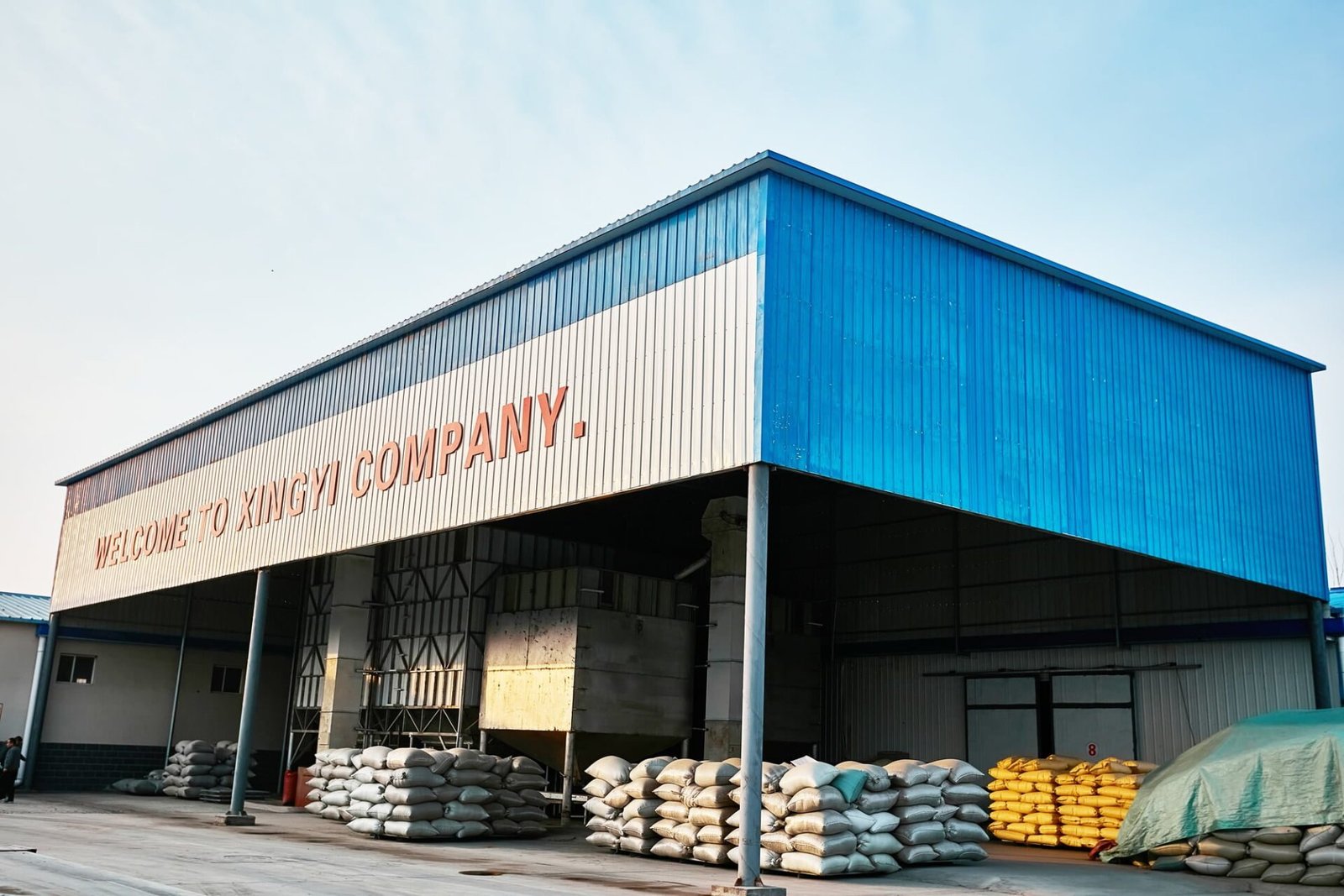
We've operated from Linhe First Farm, Bayannur City, Inner Mongolia since 2014, and our Capabilities section documents our production lines, capacity, and 16-stage inspection process directly. Ask us anything on this checklist — we're glad to answer before you commit to anything.
Should You Score or Rank Suppliers Numerically During a Self-Audit?
A simple scoring approach — rating each checklist item as satisfactory, needs follow-up, or fails to meet the bar — can help when comparing multiple suppliers side by side, since it forces a consistent evaluation rather than an overall gut impression that's hard to compare across candidates. This doesn't need to be complicated; even a basic checklist with pass/fail/unclear notes per item is more useful for comparison than an unstructured set of notes from different conversations.
What's a Common Mistake Buyers Make During a Self-Audit?
Accepting a supplier's own marketing materials — professionally shot facility photos, polished capability statements — as equivalent to verified information. These materials aren't necessarily misleading, but they're produced by the supplier to present their best case, which is a different thing from independently confirmed facts. Weight information you can verify independently (references, certificates, video walkthroughs where you can ask to see specific areas) more heavily than material the supplier controls entirely.
How Do You Balance Thoroughness Against Moving Too Slowly?
A structured self-audit doesn't need to take weeks — most of the checklist items above can be confirmed within a few business days if the supplier is responsive and has nothing to hide. If a supplier is slow or evasive in providing basic documentation during this stage, that's itself useful information about what working with them on an actual order might look like.
Which Certification Schemes Count as GFSI-Recognised?
The GFSI recognised list, August 2024 includes the BRCGS Global Standard for Food Safety (issue 8), IFS Food (version 7), FSSC 22000 (version 5.1) and the SQF Food Safety Code (edition 9). Check which issue or version a certificate refers to, because schemes are revised and a certificate against an old issue can be a sign of lapsed attention. Our guide to BRC versus IFS explains how the two best-known schemes differ.
What Can Public Trade Data Tell You About a Volume Claim?
China exported about 480 thousand tonnes of sunflower seed (all types under HS 1206) to 80 partners in 2024 (UN Comtrade). A supplier that claims 100,000 tonnes of annual exports would therefore be claiming about 21% of the national total (calculated), which is possible only for a very large exporter and is a reason to ask for evidence. The comparison is a plausibility test, not proof either way.
What Benchmarks Can You Compare a Test Certificate Against?
The National Sunflower Association publishes US crop averages that give a rough sense of normal. They describe US confection seed, not Chinese seed, so use them to prompt questions and not as pass or fail limits (NSA 2024 Crop Quality Report).
| Measure (US nonoil seed) | 2024 average | 2020-2024 range |
|---|---|---|
| Moisture (%) | 10.7 | 8.9-10.7 |
| Foreign material (%) | 11.6 | 11.6-12.8 |
| Seeds over 20/64 (%) | 85.3 | 80.2-85.4 |
| Test weight (lb/bu) | 22.7 | 21.1-24.0 |
What Does a Simple Scoring Sheet Look Like?
The sheet below turns the checklist into a record you can compare across suppliers. The status column uses the three levels described above.
| Item | Evidence you hold | Status |
|---|---|---|
| Business registration | Copy of licence, checked independently | Satisfactory / follow up / fails |
| Food safety certificate | Current copy, scheme, issue and expiry date | Satisfactory / follow up / fails |
| Capacity claim | Written figure and a reference or video that supports it | Satisfactory / follow up / fails |
| Client references | Two or more contacted, one with similar volume | Satisfactory / follow up / fails |
| Sample and test data | Sample tested against your specification | Satisfactory / follow up / fails |
| Corrective action example | A real deviation and the documented fix | Satisfactory / follow up / fails |
Start Your Own Supplier Self-Audit
Request samples and a specification sheet and use this checklist to evaluate us the same way you would any other supplier.
Featured in This Article
Sourcing Sunflower Seeds for Your Business?
Contact XingYi Trading for pricing, samples, and specification sheets on our 361, 363, and TQ6 series.
Request a Quote
James Feng
XingYi Trading — Bayannur, Inner Mongolia
More in Quality & Sourcing
 Quality & Sourcing
Do You Need a Third-Party Inspection for Your Sunflower Seed Order?
 Quality & Sourcing
How Buyers Verify They're Getting Real Confectionery Sunflower Seeds, Not Mislabeled Product
 Quality & Sourcing