Inside a Modern Sunflower Seed Processing Line: From Raw Seed to Export-Ready Bag
A stage-by-stage look at what actually happens to raw sunflower seed between arriving at a processing facility and leaving as an export-ready, inspected bag.
- 1. What Do the Key Terms Mean?
- 2. What Happens First When Raw Seed Arrives?
- 3. What Do the Cleaning and Screening Stages Remove?
- 4. What Does Color Sorting Actually Detect?
- 5. How Does the Seed Get Packed After Inspection?
- 6. How Many Total Stages Does a Batch Pass Through?
- 7. Does Every Supplier's Processing Line Look Like This?
- 8. What Happens to Seed That Gets Rejected During Sorting or Inspection?
- 9. How Much Material Does the Line Have to Remove?
- 10. Which Quality Factor Does Each Stage Address?
- 11. What Do the Capacity Figures Mean in Practice?
- 12. How Do You Check the Size Stage Afterwards?
- 13. How Do the Confirmed Facts Fit Together?
- 14. What Are the Limits of This Guide?
- 15. How Can You Check a Supplier's Account of Its Line?
- 16. Where Do These Numbers Come From?
- 17. See Our Process Firsthand
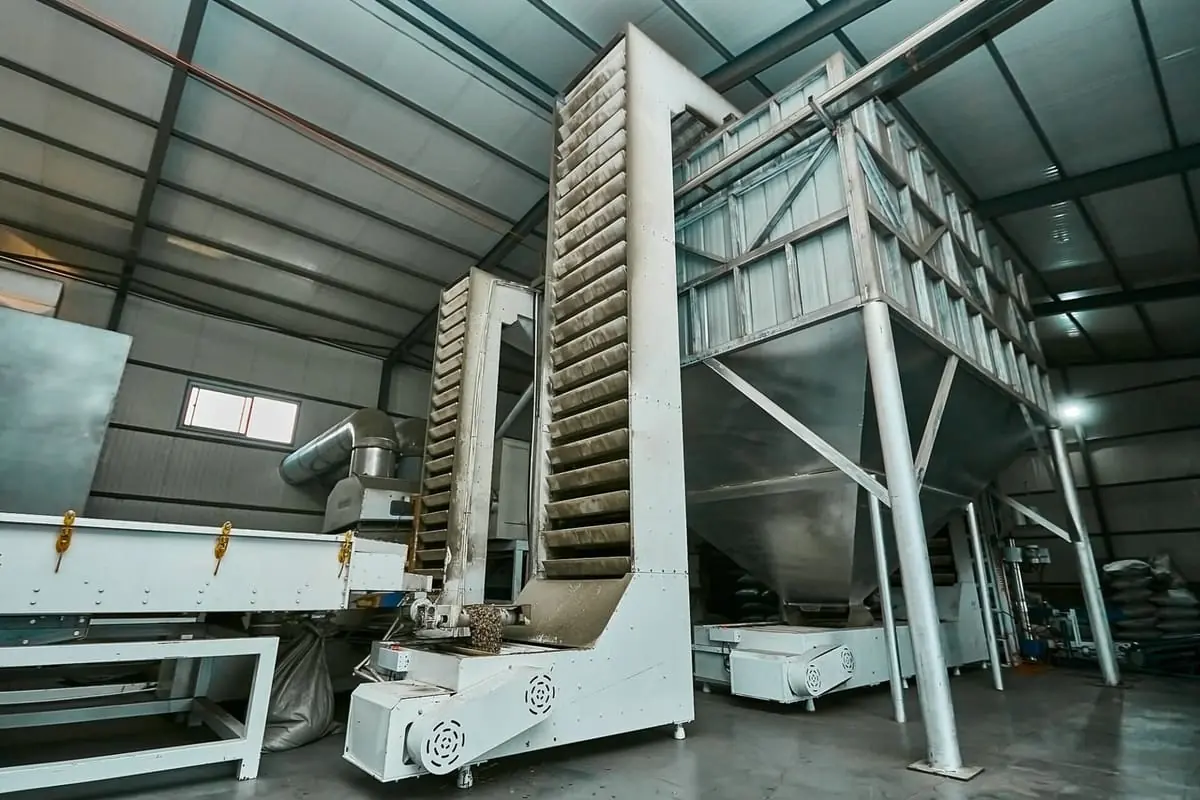
Raw sunflower seed arriving at a processing facility looks very different from the export-ready bag that ships. This guide walks through the stages in between, from raw material inspection to screening, stone removal, color sorting and X-ray inspection, with the stages confirmed for XingYi Trading's 16-stage grading line marked as such (XingYi Trading company data, 2026).
What Do the Key Terms Mean?
A color sorter is a machine that scans each seed with cameras at high speed and ejects those whose color shows damage, mold or age.
A gravity separator is a machine that separates seed by density, so that stones, soil and lighter debris leave the stream.
Foreign material is anything in a lot that is not the seed being graded, such as stalk, leaf and head debris, and the NSA reports it for every crop (NSA 2024 Crop Quality Report).
What Happens First When Raw Seed Arrives?
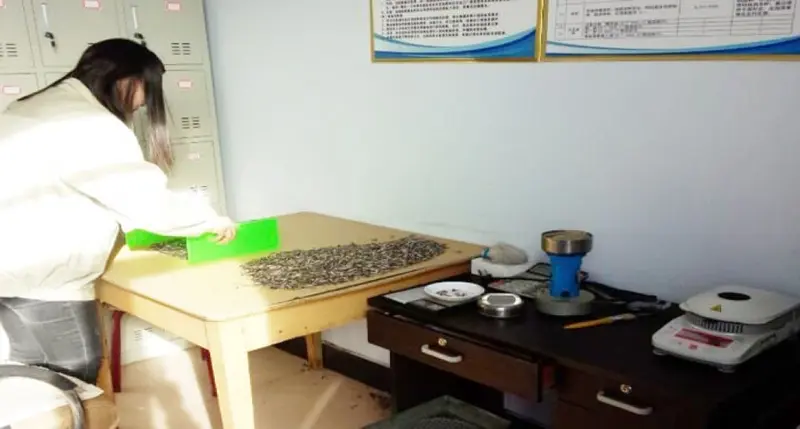
Raw material inspection, checking moisture content, visible foreign material, and general batch condition before the seed enters the rest of the line. This first checkpoint matters because any moisture or contamination issue is far cheaper to catch here than after the batch has already been through multiple downstream processing stages.
What Do the Cleaning and Screening Stages Remove?
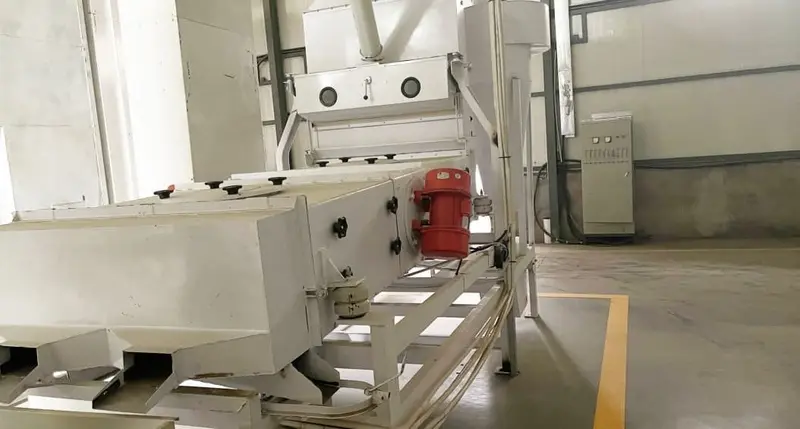
Primary screening removes undersized and misshapen seeds using mechanical sieves sized to the target grade, while stone removal and gravity separation equipment pull out stones, soil, and lighter debris by density difference. These are mechanical, physical separation stages, no chemicals involved, that narrow the batch down to seed matching the target size and density profile before it moves to optical sorting.
What Does Color Sorting Actually Detect?
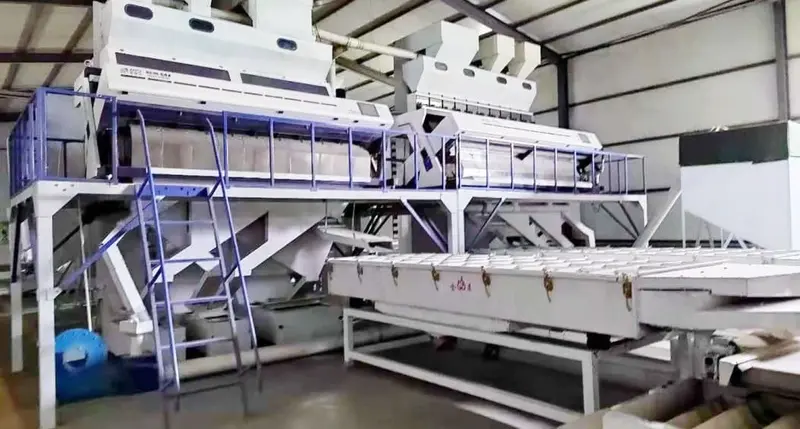
Optical color-sorting equipment scans seed at high speed and rejects anything discolored, a possible sign of mold, age, or damage, that wouldn't be caught reliably by visual manual inspection alone at production volume.
How Does the Seed Get Packed After Inspection?
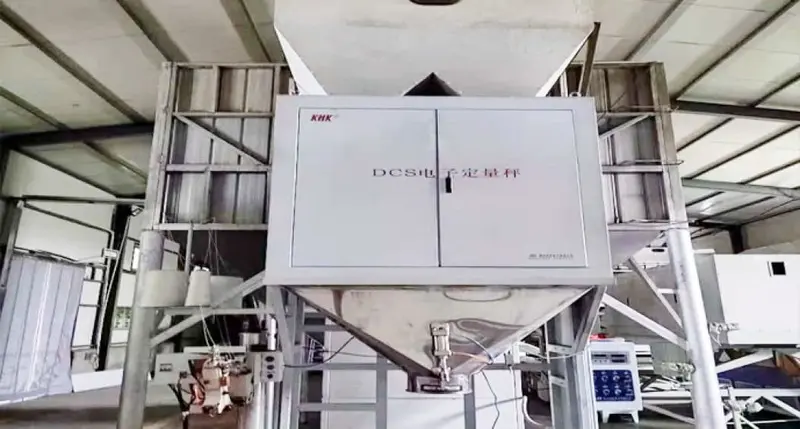
Once a batch clears every inspection stage, it moves to automated packaging, filled into the bag format specified for that order, whether standard PP woven bags, private-label bags, or another format. Packaging is generally the last stage before a batch moves to storage or directly to loading for shipment.
How Many Total Stages Does a Batch Pass Through?
Our grading line has 16 stages, including screening, stone removal, color sorting, gravity separation and X-ray inspection (XingYi Trading company data, 2026).
Does Every Supplier's Processing Line Look Like This?
GFSI-benchmarked schemes give a common reference for what a certified facility is audited against, and independent inspectors are one way to verify a specific facility's actual process against the claim.
What Happens to Seed That Gets Rejected During Sorting or Inspection?
Rejected material is separated out and doesn't enter the export-grade batch, depending on the reason for rejection, it may be reprocessed for a lower grade product, sold into a different market with different specifications, or discarded if it fails a food-safety threshold like mold or contamination. This is part of why a facility running multiple grade lines (like our 361, 363, and TQ6 series) can make productive use of material that doesn't meet the top-tier spec, rather than treating every rejection as waste.
How Much Material Does the Line Have to Remove?
The NSA's 2024 samples of US confection seed averaged 11.6% foreign material at delivery to processors, and the five-year range was 11.6% to 12.8% (NSA 2024 Crop Quality Report). On those figures, every delivered tonne holds roughly 116 kg of material that cleaning must remove (calculated). These are US figures taken before cleaning, but they show why the early screening and stone removal stages carry so much of the work.
Which Quality Factor Does Each Stage Address?
The table links the stages described above to the measures a buyer reads on a test certificate. The mapping is ours and shows what each stage is designed to improve.
| Stage | What it targets | Measure on a certificate |
|---|---|---|
| Raw material inspection | Wet or contaminated deliveries | Moisture; visible foreign material |
| Primary and secondary screening | Undersized and misshapen seed | Size share over a named screen |
| Stone removal and gravity separation | Stones, soil, light debris | Foreign material |
| Color sorting | Discolored or damaged seed | Damage; appearance |
| X-ray inspection | Internal insect damage; dense foreign objects | Foreign objects; insect damage |
| Automated packaging | Weight accuracy and clean packing | Net weight; bag integrity |
What Do the Capacity Figures Mean in Practice?
XingYi Trading reports 9 production lines, up to 300 tons of daily output (company data, 2026). That is an average of about 33 tons per line per day at full output (calculated). Ask any supplier for both numbers and for the typical share in use.
How Do You Check the Size Stage Afterwards?
Screening sets size, but the finished lot should be checked against the size line in your specification, using a screen test for the lot and calipers for spot checks. Our guide to 20/64 size grading explains the measure and the US crop figures behind it.
How Do the Confirmed Facts Fit Together?
Three facts frame the line described above. XingYi Trading operates nine lines with capacity of up to 300 tonnes a day, on a grading line of 16 stages that includes screening, stone removal, color sorting, gravity separation and X-ray inspection (company data, 2026). Lower-grade material is used on the lines for other grades.
For a buyer, the practical use is to compare these stages with the specification you need. Ask which stages remove the defects that matter to your market, for example stones and foreign material, and which are done by machine. Everything on this page about stages other than those listed is general description of how seed lines work, not a statement about our line.
Factory visits are welcome, and samples are available with the buyer paying shipping, so a buyer can see the line and test the seed before ordering. Orders start at one 20ft container.
What Are the Limits of This Guide?
The description of the line is the company's own account of its processing steps and has not been checked by an independent party. Capacity and quality figures for your order should come from the supplier's records and from your own testing.
How Can You Check a Supplier's Account of Its Line?
Ask which stages exist, what each one removes and how each is checked. Customers are welcome to visit our factory, and a visit lets you compare the account with what you see. If you cannot travel, ask for the same answers in writing and compare them with what the samples show.
Keep the answers in your supplier file and compare them again at the next order.
Where Do These Numbers Come From?
- •NSA 2024 Crop Quality Report - moisture, test weight and production figures for US confection seed. Checked October 2026.
- •NSA: harvesting and storage - moisture guidance for stored seed. Checked October 2026.
See Our Process Firsthand
Request samples (the buyer pays shipping), or visit our facility in Bayannur. Product details are on our products page, and the full buying process is in our bulk sunflower seeds buyer's guide.
Featured in This Article
Sourcing Sunflower Seeds for Your Business?
Contact XingYi Trading for pricing and samples (the buyer pays shipping) on our 361, 363, and TQ6 series.
Request a Quote
XingYi Trading
XingYi Trading — Bayannur, Inner Mongolia
More in Quality & Sourcing
 Quality & Sourcing
From First Container to Long-Term Partner: What Changes When You Become a Repeat Sunflower Seed Buyer
 Quality & Sourcing
Trade Shows, Marketplaces, or Direct From the Factory: How to Verify a Sunflower Seed Supplier No Matter Where You Found Them
 Quality & Sourcing