
Sunflower Seed Packaging Options for Bulk Export: Bag Sizes, Private Label, and MOQ
PP woven bags, jumbo bags, and private-label options for bulk sunflower seed export — what's standard, what's customizable, and what to confirm with your supplier.
- 1. What Are the Standard Bulk Packaging Formats for Sunflower Seeds?
- 2. What Makes a Good Export Bag for Sunflower Seeds?
- 3. What Are FIBC or Jumbo Bags, and When Do They Make Sense?
- 4. Can You Get Private-Label or Custom Packaging?
- 5. What Should You Confirm About Food Safety Testing at the Packaging Stage?
- 6. How Should Packaging Labeling Be Handled for Different Destination Markets?
- 7. What Packaging Details Should Be Confirmed in Writing Before Production?
- 8. Does Packaging Format Affect MOQ?
- 9. Does Vacuum-Sealed Packaging Make Sense for Bulk Orders?
- 10. Do Export Bags Need to Meet Any International Packaging Standard?
- 11. How Does Bag Format Affect Container Loading Efficiency?
- 12. Ready to Discuss Packaging for Your Order?
Packaging affects more than presentation — bag format influences container loading efficiency, shelf life in transit, and how ready a shipment is for retail once it arrives. Here's what's standard in bulk sunflower seed export, and what's typically negotiable.
What Are the Standard Bulk Packaging Formats for Sunflower Seeds?
- •PP (polypropylene) woven bags — the standard bulk export format, most commonly in 25kg and 50kg sizes
- •Smaller variants (10-20kg) with BOPP lamination for added moisture resistance and print quality, used in some markets
- •FIBC / jumbo bags — bulk bags for larger-volume shipments, generally used where handling equipment supports bigger unit loads
| Format | Size | Material | Best for |
|---|---|---|---|
| PP woven bag (standard) | 25kg / 50kg | Polypropylene woven | Standard bulk export |
| Small woven / laminated bag | 10-20kg | BOPP-laminated (moisture + print) | Markets needing retail-ready print |
| FIBC / jumbo bag | Large unit loads | Flexible intermediate bulk container | High-volume loads with handling equipment |
| Vacuum-sealed pack | Retail unit | Vacuum film | Higher-value retail packs (not raw bulk) |
What Makes a Good Export Bag for Sunflower Seeds?
- •Tightly woven seams that resist moisture and pest infiltration
- •Breathable construction that allows air circulation while limiting moisture ingress
- •Reinforced handles for manual and mechanical handling
- •Top-fill, bottom-discharge design for efficient loading and unloading
What Are FIBC or Jumbo Bags, and When Do They Make Sense?
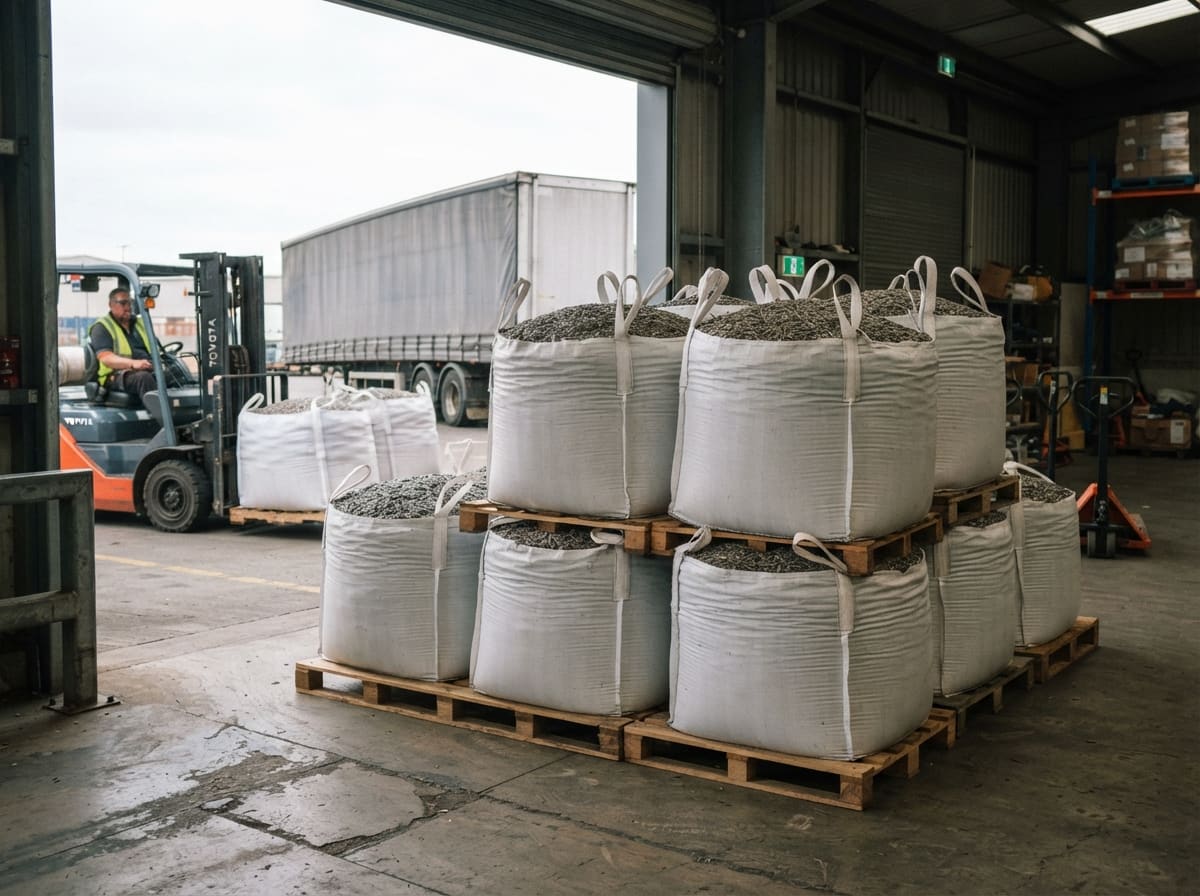
FIBC (flexible intermediate bulk container) bags, sometimes called jumbo bags, are a bulk packaging format generally used where handling equipment supports larger unit loads than a standard 25kg or 50kg sack. They can make loading and unloading more efficient for very large shipments, though exact specifications and suitability vary by supplier and by the destination market's own handling infrastructure — confirm with your supplier whether this format fits your specific order and receiving setup.
Can You Get Private-Label or Custom Packaging?
Packaging can generally be customized with private-label printing, branding, and specific bag specifications — but exact terms (minimum quantities for custom printing, artwork lead times, any additional cost) vary by supplier and order size, so confirm these directly rather than assuming a standard arrangement applies. Tell us your target bag size, branding, or private-label requirements in your quote request and we'll confirm what's possible for your order.
What Should You Confirm About Food Safety Testing at the Packaging Stage?
Some buyers, particularly in the EU and North America, ask about aflatoxin test reports alongside standard export documentation. Exact required thresholds vary by destination market and should be confirmed against your specific country's current regulatory limits via FDA's food safety resources or the equivalent agency for your destination — ask your supplier what testing is performed and at what stage, and confirm current documentation directly when you request a quote.
How Should Packaging Labeling Be Handled for Different Destination Markets?
Labeling requirements — language, nutritional panel format, allergen statements, country-of-origin marking — vary by destination market and are generally the importer's responsibility to finalize even when a supplier handles the physical print run. Confirm early in the relationship whether your supplier can print destination-compliant labels directly, or whether labeling will need to happen after the shipment arrives at your own facility.
What Packaging Details Should Be Confirmed in Writing Before Production?
- •Exact bag size and material (standard PP woven, laminated, vacuum-sealed)
- •Branding and label artwork, including any destination-market-specific labeling requirements
- •Net weight per bag and total shipment weight
- •Palletizing requirements, if any, for your specific logistics setup
Does Packaging Format Affect MOQ?
It can — packaging format affects how efficiently a container can be loaded, which is one of the factors that shapes minimum order quantity. See our breakdown of how MOQ works for the full picture.
Does Vacuum-Sealed Packaging Make Sense for Bulk Orders?
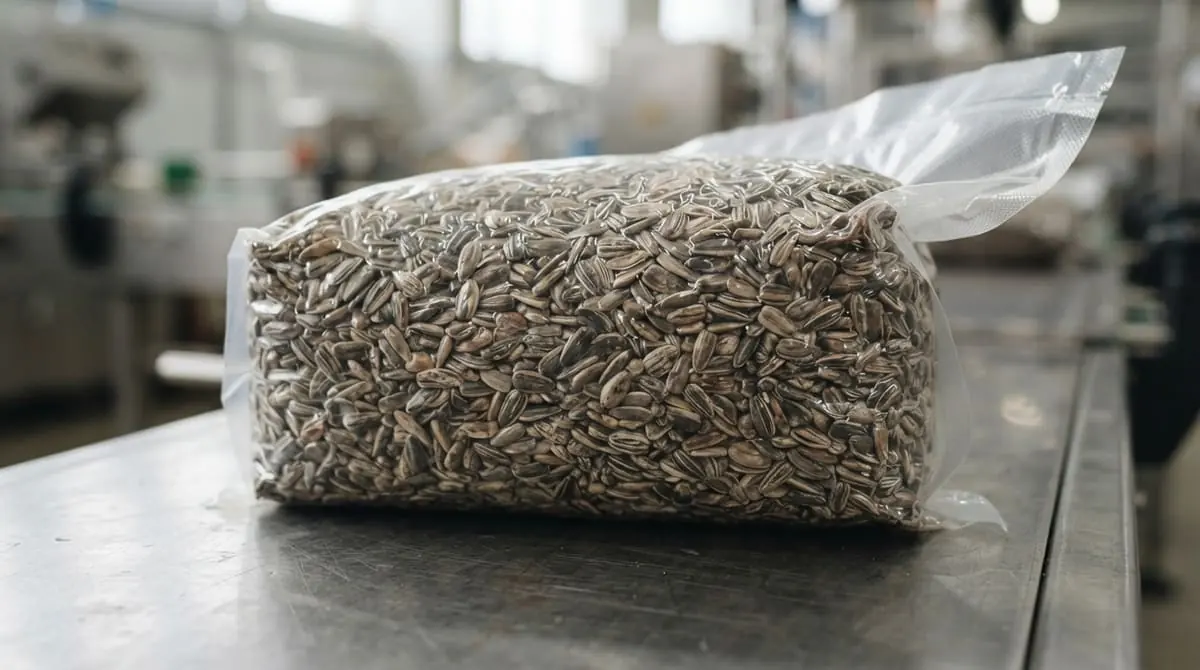
Vacuum sealing offers the strongest freshness protection by removing oxygen entirely, but it's typically used for higher-value, smaller-unit retail packs rather than raw bulk-commodity shipping, where standard or lined woven bags dominate on cost and volume grounds. See our comparison of vacuum-sealed vs. standard export bags for when each makes sense.
Do Export Bags Need to Meet Any International Packaging Standard?
If wood packaging materials — pallets, crates — are part of the shipment, they need to meet the ISPM 15 international standard (debarked, heat-treated, and stamped with an official mark), covered in more detail in our HS codes and documentation guide. The bags themselves aren't subject to ISPM 15, but food-contact packaging materials should meet your destination market's general food-packaging safety requirements.
How Does Bag Format Affect Container Loading Efficiency?
Bag shape and stacking behavior matter as much as raw bag size once you're trying to fill a 20-foot or 40-foot container efficiently. A standard PP woven bag, palletized in uniform stacks, loads predictably and leaves minimal wasted space, while irregularly filled or inconsistently sized bags create gaps that add up to real lost capacity across a full container. FIBC jumbo bags load fewer, larger units per container but can leave more void space around their rounded profile unless the warehouse has handling equipment suited to them.
This is one of the reasons packaging format and container-loading strategy get discussed together rather than separately — a bag format that seems marginally more expensive per unit can still lower total landed cost if it improves how densely a container loads. If maximizing container utilization is a priority for your order, mention it when requesting a quote so bag format and loading plan can be confirmed together rather than as two separate decisions.
Ready to Discuss Packaging for Your Order?
Request a quote with your target bag size, branding needs, and order volume, and we'll confirm packaging options for your specific shipment. To see how packaging fits the rest of an order, read our bulk sunflower seeds buyer's guide.
Featured in This Article
Sourcing Sunflower Seeds for Your Business?
Contact XingYi Trading for pricing, samples, and specification sheets on our 361, 363, and TQ6 series.
Request a Quote
James Feng
XingYi Trading — Bayannur, Inner Mongolia
More in Logistics & Packaging
 Logistics & Packaging
How to Choose a Freight Forwarder for Importing Sunflower Seeds From China
 Logistics & Packaging
Vacuum-Sealed vs. Standard Export Bags: Packaging Choices That Affect Freshness
 Logistics & Packaging