
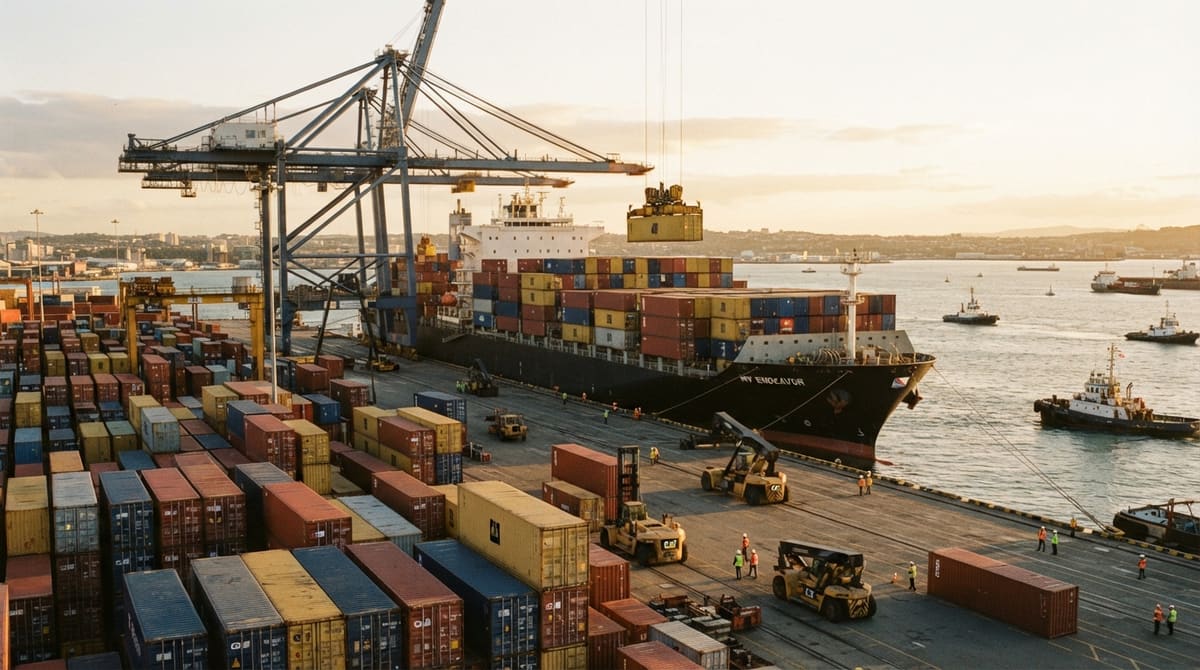
Container Loading Basics for Bulk Sunflower Seed Orders: FCL vs. LCL
The practical difference between Full Container Load and Less than Container Load shipping, and when each makes sense for a bulk sunflower seed order.
- 1. What's the Difference Between FCL and LCL?
- 2. At What Volume Does FCL Become More Cost-Effective Than LCL?
- 3. How Much Does a Standard Container Hold?
- 4. Why Does FCL Matter More for Food-Grade Dry Goods Like Seeds?
- 5. How Much Faster Is FCL Compared to LCL?
- 6. Does Packaging Need to Be Different for LCL Versus FCL?
- 7. How Should a Buyer Decide Between FCL and LCL for a Specific Order?
- 8. Does Container Choice Affect Insurance Considerations?
- 9. How Does This Connect to MOQ?
- 10. Should a First-Time Buyer Start With LCL?
- 11. Does Destination Port Infrastructure Affect the FCL vs. LCL Decision?
- 12. Plan Your Container Loading
Container loading strategy affects cost, transit time, and even product quality for bulk dry goods like sunflower seeds. Here's the practical difference between FCL and LCL shipping, and when each makes sense.
What's the Difference Between FCL and LCL?
FCL (Full Container Load) means exclusive use of an entire container — typically 20ft or 40ft. LCL (Less than Container Load) means your shipment shares container space with other shippers' cargo, consolidated and deconsolidated at a container freight station (CFS) along the way.
At What Volume Does FCL Become More Cost-Effective Than LCL?
As a general rule of thumb, LCL tends to be preferred for smaller shipments, while FCL becomes more economical once cargo reaches somewhere in the mid-teens of cubic meters (CBM) or more — at that point, combined LCL per-CBM rates plus CFS handling fees (consolidation, deconsolidation, documentation, terminal handling) can approach or exceed the cost of booking a full 20ft container outright. A practical utilization guideline: once cargo can fill roughly 60-70% or more of a container's volume, FCL usually delivers better value.
How Much Does a Standard Container Hold?
- •20ft container — roughly 28 CBM maximum, about 10 standard pallets in a single tier
- •40ft container — roughly 58 CBM maximum, about 20-21 standard pallets
- •40ft high-cube container — roughly 68 CBM maximum
Why Does FCL Matter More for Food-Grade Dry Goods Like Seeds?
FCL is generally faster in transit and lower-risk for contamination or damage, since goods are loaded once, sealed, and unloaded once. LCL involves multiple handling touchpoints, which for food-grade dry goods raises the practical risk of moisture exposure, odor transfer, or pest contamination — and typically requires more robust packing (palletizing, shrink-wrap, stronger cartons) to hold up through the extra handling.
How Much Faster Is FCL Compared to LCL?
FCL shipments are generally markedly faster in transit than LCL — often on the order of one to two weeks quicker — because LCL cargo needs to be consolidated with other shippers' goods at a container freight station before departure and deconsolidated again on arrival, adding time at both ends of the journey that FCL skips entirely.
Does Packaging Need to Be Different for LCL Versus FCL?
Yes — because LCL cargo passes through more handling touchpoints and often shares space with other shippers' goods, it typically needs more robust packing than an FCL shipment of the same product: stronger cartons, more thorough palletizing, and shrink-wrap to protect against the extra handling and potential contact with other cargo. See our packaging options guide for the specific bag formats this typically involves, and confirm requirements with your freight forwarder specifically for LCL if you're considering that route.
How Should a Buyer Decide Between FCL and LCL for a Specific Order?
Start with your target volume in CBM and compare it against the roughly mid-teens CBM threshold where FCL typically becomes more economical — if you're close to or above that threshold, request FCL pricing alongside LCL to compare directly rather than assuming LCL is automatically cheaper for a smaller-sounding order. Your freight forwarder can usually provide both quotes side by side.
Does Container Choice Affect Insurance Considerations?
FCL's single load/unload cycle generally means fewer opportunities for cargo damage compared to LCL's multiple handling touchpoints, which can be a relevant factor when arranging cargo insurance — though the exact premium impact depends on your insurer and policy. Discuss your container choice with whoever is arranging insurance so the coverage reflects your actual shipping method.
How Does This Connect to MOQ?
This is exactly why minimum order quantity in this industry is often set around what fills a container efficiently — see our full MOQ explainer for how that connects to container economics specifically.
Should a First-Time Buyer Start With LCL?
If your target volume doesn't yet justify a full container, LCL can make sense for a smaller trial order, accepting a higher per-unit shipping cost in exchange for a lower total commitment. Raise this directly with your supplier if a trial order matters to you before scaling to a full container.
Does Destination Port Infrastructure Affect the FCL vs. LCL Decision?
It can — a destination port with efficient container-yard handling and a nearby CFS makes LCL a more practical option than a port where deconsolidation adds significant extra transit time or cost. Some freight forwarder resources note that LCL transit reliability varies more by trade lane than FCL does, simply because there are more parties and handoffs involved in getting a shared container's contents sorted and released. If your destination port has a reputation for slower LCL processing, that's worth weighing alongside the raw cost comparison.
Because this varies by trade lane and by season, it's worth asking your freight forwarder directly about typical LCL performance on your specific origin-to-destination route, rather than relying on general FCL/LCL guidance alone.
Plan Your Container Loading
Request a quote with your target volume, and we'll help confirm whether FCL or LCL fits your order best.
Featured in This Article
Sourcing Sunflower Seeds for Your Business?
Contact XingYi Trading for pricing, samples, and specification sheets on our 361, 363, and TQ6 series.
Request a Quote
James Feng
XingYi Trading — Bayannur, Inner Mongolia
More in Logistics & Packaging
 Logistics & Packaging
How to Choose a Freight Forwarder for Importing Sunflower Seeds From China
 Logistics & Packaging
Vacuum-Sealed vs. Standard Export Bags: Packaging Choices That Affect Freshness
 Logistics & Packaging