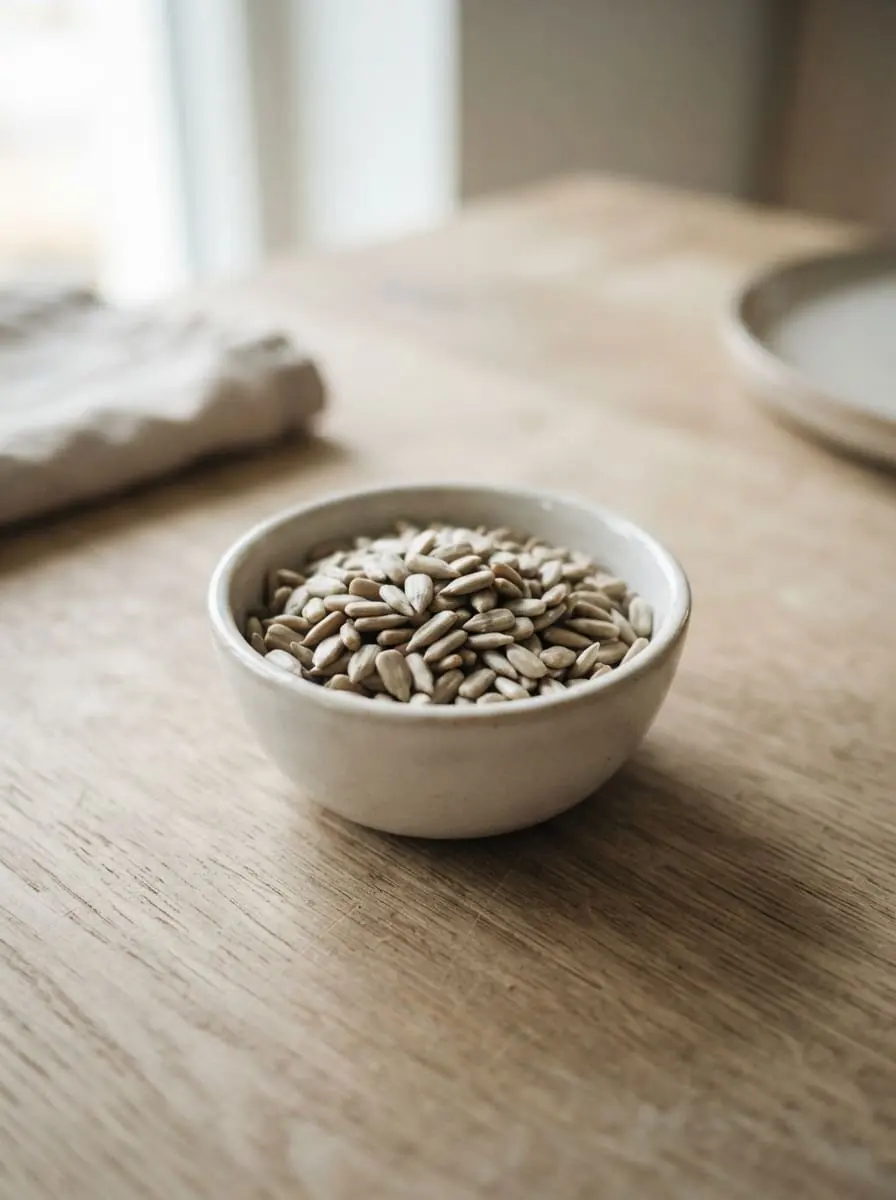
Sunflower Seed Nutrition Facts for Your Private-Label Packaging
The USDA nutrition data behind a sunflower seed product, framed for a buyer who needs numbers for their own label rather than a general health overview.
- 1. What Do the Key Terms Mean?
- 2. What Are the Core Nutrition Facts for Sunflower Seed Kernels?
- 3. Where Does This Data Come From, and Can You Verify It?
- 4. Do These Numbers Change Based on Raw vs. Roasted Form?
- 5. Do Nutrition Numbers Vary Between the 361, 363, and TQ6 Series?
- 6. Should Your Label Use USDA Reference Data or Your Supplier's Batch-Specific Testing?
- 7. What Allergen Information Should Appear on a Sunflower Seed Label?
- 8. What Other Nutrients Typically Appear on a Sunflower Seed Label?
- 9. What Are the FDA's Rounding Rules for a Nutrition Facts Panel?
- 10. What Counts as a Standard Serving Size for Sunflower Seeds on a US Label?
- 11. Does Country of Sale Change Which Nutrition Format You Need?
- 12. How Do the USDA Records Differ by Processing?
- 13. What Are the FDA Daily Values for the Key Nutrients?
- 14. How Do You Convert Per-100 g Values to a Serving?
- 15. Why Should the Label Reflect Your Own Product?
- 16. What Are the Limits of This Guide?
- 17. Get Nutrition Data for Your Label
A private-label sunflower seed product needs nutrition numbers for its own label. USDA lists dried kernels at 584 kcal, 20.8 g of protein and 51 g of fat per 100 g (USDA FoodData Central), and this guide shows how to convert those values to a serving and what a label still has to confirm. Check the rules of your market before printing any value.
What Do the Key Terms Mean?
A serving on a label is the amount customarily consumed, stated in grams as well as in a household measure, and every value on the panel is per serving.
The Daily Value (DV) is the reference amount FDA uses to express a nutrient as a percentage on the label, for example 2,300 mg for sodium and 15 mg for vitamin E (FDA Daily Values).
SR Legacy is the USDA FoodData Central dataset that holds the sunflower kernel records used in this guide (USDA FoodData Central).
What Are the Core Nutrition Facts for Sunflower Seed Kernels?
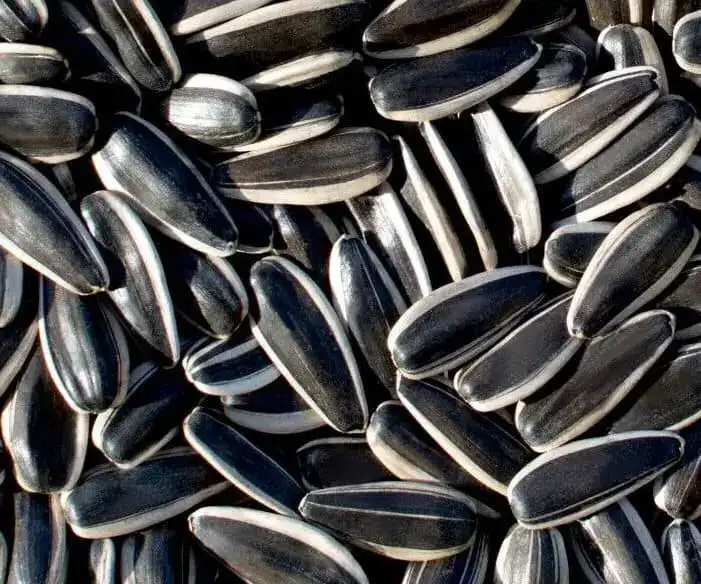
- •Calories: approximately 584 kcal per 100g
- •Protein: approximately 20.8g per 100g
- •Fat: approximately 51g per 100g (predominantly unsaturated)
- •Vitamin E: approximately 35mg per 100g (a very high concentration relative to most foods)
- •Magnesium: approximately 325mg per 100g
Where Does This Data Come From, and Can You Verify It?
These figures come from USDA FoodData Central, the same public database referenced in our general nutrition benefits guide, search food ID 170562 directly to pull the full nutrient breakdown yourself rather than relying solely on a secondary source when you're finalizing a label.
Do These Numbers Change Based on Raw vs. Roasted Form?
Yes, modestly, roasting can slightly alter moisture content and, by extension, the per-100g calorie and fat density, though the core nutrient profile stays broadly similar. If you're building a label for a specifically roasted product, confirm you're pulling data for that exact form (USDA FoodData Central lists raw, dry-roasted, and oil-roasted as separate entries) rather than raw-kernel figures.
Do Nutrition Numbers Vary Between the 361, 363, and TQ6 Series?
USDA's record describes dried sunflower kernels in general and is not a test result for any of our series; our series comparison guide explains how the series differ. For a label requiring your specific batch's tested values rather than USDA reference data, request current lab-tested nutrition data from your supplier directly.
Should Your Label Use USDA Reference Data or Your Supplier's Batch-Specific Testing?
This depends on your destination market's labeling regulations, some markets accept standard reference database values for a raw agricultural commodity, while others expect nutrition testing on your specific finished product, particularly if it's roasted, seasoned, or otherwise processed beyond the raw kernel. Confirm your specific market's requirement with a regulatory/labeling specialist rather than assuming reference data is always sufficient.
What Allergen Information Should Appear on a Sunflower Seed Label?
Sunflower is not on the US list of nine major food allergens or the EU list of 14 allergens (FDA; FSAI), so the seed itself does not trigger a mandatory declaration there, but processing facilities that handle several products should still confirm and disclose any cross-contact risk. Confirm your destination market's current allergen labeling requirements, and ask your supplier directly whether their facility processes other allergens on shared equipment.
What Other Nutrients Typically Appear on a Sunflower Seed Label?
- •Total carbohydrates: roughly 20g per 100g, including dietary fiber around 8.6g
- •Zinc: roughly 5mg per 100g
- •Selenium: roughly 53mcg per 100g
- •Copper: roughly 1.8mg per 100g
- •Potassium: roughly 645mg per 100g
What Are the FDA's Rounding Rules for a Nutrition Facts Panel?
FDA rounding rules are specific and vary by nutrient: calories round to the nearest 5 if between 5-50 per serving, or to the nearest 10 above 50. Carbohydrates, fiber, sugars, and protein under 0.5g are labeled as 0; between 0.5g and 1g they're labeled "less than 1g" or rounded to 1g; and 1g or more rounds to the nearest whole gram. These rules exist specifically so labels are consistent and comparable across products, getting them right matters for compliance, not just cosmetic label design.
What Counts as a Standard Serving Size for Sunflower Seeds on a US Label?
FDA maintains reference amounts customarily consumed (RACC) for specific food categories that determine standard serving size for labeling purposes, for seeds and nuts, this is typically defined in the applicable federal reference tables rather than left to a brand's discretion. If a serving size falls exactly halfway between two standard increments, labeling rules require rounding up to the next size. Confirm the current applicable reference amount for your specific product category with a labeling specialist rather than choosing a serving size that happens to make the numbers look more favorable.
Does Country of Sale Change Which Nutrition Format You Need?
Yes, meaningfully, a US Nutrition Facts panel follows FDA's specific format and rounding rules, while the EU uses a different nutrition declaration format under its own food information regulations, and other markets have their own distinct requirements again. If you're selling the same private-label product into multiple countries, you'll typically need a separate, correctly formatted label for each market rather than one universal panel that satisfies every jurisdiction at once.
This is worth planning for early in a multi-market private-label launch, since retrofitting a second country's label format after packaging is already finalized for one market can mean redesigning artwork rather than making a simple addition.
How Do the USDA Records Differ by Processing?
USDA lists separate records for dried, dry roasted, oil roasted and toasted kernels, with and without salt. Energy is nearly the same across them, and sodium is what changes. The table gives per-100 g values from the SR Legacy download.
| Record (per 100 g) | kcal | Protein (g) | Fat (g) | Sodium (mg) |
|---|---|---|---|---|
| Dried kernels (raw) | 584 | 20.8 | 51.5 | 9 |
| Dry roasted, no salt | 582 | 19.3 | 49.8 | 3 |
| Oil roasted, no salt | 592 | 20.1 | 51.3 | 3 |
| Dry roasted, salt added | 582 | 19.3 | 49.8 | 655 |
| Oil roasted, salt added | 592 | 20.1 | 51.3 | 303 |
| Toasted, salt added | 619 | 17.2 | 56.8 | 613 |
What Are the FDA Daily Values for the Key Nutrients?
FDA lists these adult reference amounts, which you need to convert amounts into percentages (FDA Daily Values).
| Nutrient | Daily Value |
|---|---|
| Total fat | 78 g |
| Saturated fat | 20 g |
| Sodium | 2,300 mg |
| Total carbohydrate | 275 g |
| Dietary fiber | 28 g |
| Protein | 50 g |
| Vitamin E | 15 mg alpha-tocopherol |
| Magnesium | 420 mg |
| Selenium | 55 mcg |
| Iron | 18 mg |
| Zinc | 11 mg |
| Potassium | 4,700 mg |
How Do You Convert Per-100 g Values to a Serving?
Multiply each per-100 g value by the serving weight divided by 100. For a 28 g serving of dried kernels, that gives about 164 kcal, 5.8 g of protein and 14.4 g of fat, and for dry roasted kernels with salt added about 183 mg of sodium, which is 8% of the Daily Value (calculated from USDA FoodData Central). These are reference figures, and the rounding and formatting rules for the final panel still apply.
The USDA values describe shelled kernels. XingYi Trading supplies in-shell seed, whose weight includes the hull, so 28 g of the seed you buy is not 28 g of kernel; weigh the kernels after dehulling.
Why Should the Label Reflect Your Own Product?
The USDA records describe typical products, and a particular lot may differ in moisture, roast level and salt. Several markets accept database values for a simple raw ingredient, and others expect testing of the finished product, so confirm the requirement with your regulatory adviser and keep a laboratory result on file for any seasoned or roasted line.
What Are the Limits of This Guide?
This guide explains how label values are usually derived and is not regulatory advice. Rounding rules and serving sizes are set by law in each market, and the label has to describe your own product, tested or calculated by a qualified person.
Get Nutrition Data for Your Label
Request samples (the buyer pays shipping) and let us know what nutrition documentation your label requires. Product details are on our products page, and the full buying process is in our bulk sunflower seeds buyer's guide.
Featured in This Article
Sourcing Sunflower Seeds for Your Business?
Contact XingYi Trading for pricing and samples (the buyer pays shipping) on our 361, 363, and TQ6 series.
Request a Quote
XingYi Trading
XingYi Trading — Bayannur, Inner Mongolia
More in Quality & Sourcing
 Quality & Sourcing
Private-Label Sunflower Seeds: What Snack Brands and Distributors Should Know
 Quality & Sourcing
BRC vs. IFS: Food Safety Certifications Sunflower Seed Buyers Should Ask About
 Quality & Sourcing