
Sunflower Seed Nutrition: Immune Support, Weight Management, and Minerals
Vitamin E, protein, fiber, and a dense mineral profile — a complete look at the nutrients in sunflower seeds and the role they play in immune function, weight management, and daily nutrition.
- 1. What Nutrients in Sunflower Seeds Support the Immune System?
- 2. How many seeds would it take to notice an effect?
- 3. What Is the Nutritional Profile of Sunflower Seeds (per 100g)?
- 4. How Do These Nutrients Support Weight Management?
- 5. What's a Practical Daily Habit for Adding Sunflower Seeds to a Diet?
- 6. Are sunflower seeds too high in calories for weight loss?
- 7. What Essential Minerals Do Sunflower Seeds Provide?
- 8. How Do Sunflower Seeds Compare to Other Nuts and Seeds for Minerals?
- 9. Does roasting reduce the mineral content of sunflower seeds?
- 10. Why Does Nutrient Density Matter for Snack Brand Buyers?
- 11. Where Can You Source Sunflower Seeds for a Health or Wellness Brand?
Sunflower seeds are nutrient-dense in ways that go well beyond a quick snack — vitamin E, protein, fiber, healthy fats, and a dense mineral profile all show up in meaningful amounts per serving. This is one reason snack brands and health-food distributors source our sunflower seeds specifically for immune-support, weight-conscious, and general wellness-positioned product lines.
What Nutrients in Sunflower Seeds Support the Immune System?
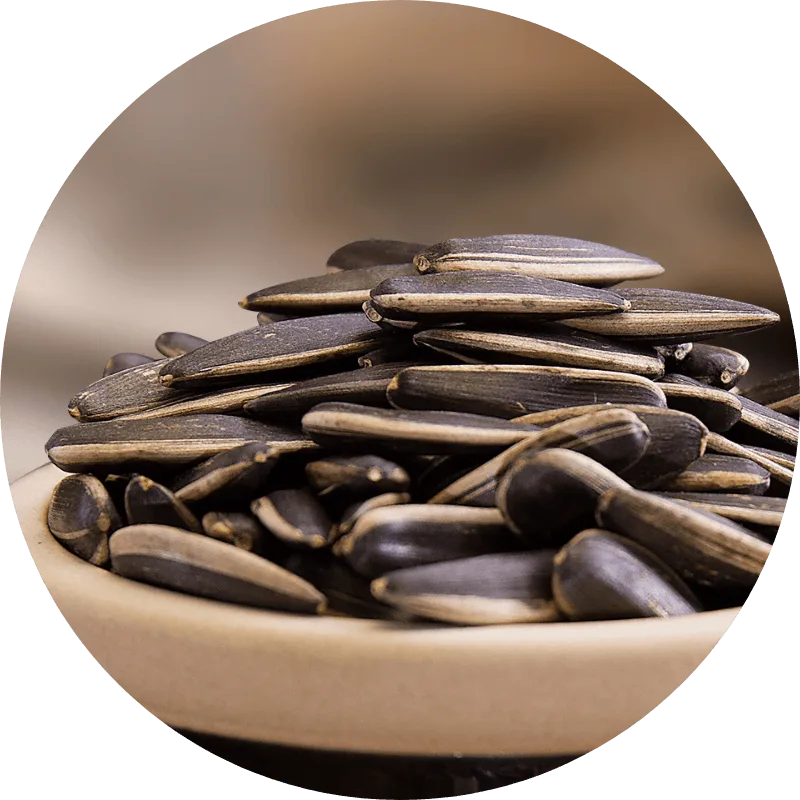
- •Vitamin E — a powerful antioxidant that helps protect cells from free-radical damage. Sunflower seed kernels are one of the richest natural sources of vitamin E, providing about 234% of the Daily Value per 100g according to USDA FoodData Central
- •Zinc — supports the development of immune cells, including T-cells
- •Selenium — helps reduce inflammation and supports cytokine production
- •Healthy fats — omega-6 fatty acids support the body's inflammatory immune response
- •Protein — supplies amino acids needed for antibody production
- •Fiber — feeds beneficial gut bacteria that support overall immunity
- •Magnesium — helps regulate immune cell and antibody activity
- •Antioxidants — flavonoids and phenolic acids help protect cells from oxidative stress
How many seeds would it take to notice an effect?
There's no single seed count that triggers an immune benefit — nutrient intake works cumulatively over a regular diet, not from a single serving. A daily handful (about 28g, or a small palmful of shelled kernels) is a reasonable, sustainable way to work these nutrients into a diet consistently, rather than treating any one serving as a targeted dose.
What Is the Nutritional Profile of Sunflower Seeds (per 100g)?
Sunflower seeds are calorie-dense, which can sound like the opposite of what a weight-conscious diet needs — but the combination of protein, fiber, and healthy fats they provide plays a real role in appetite regulation when portioned sensibly. Figures below are for raw, dried kernels per USDA FoodData Central; the 30g column is roughly a 1-2 tablespoon serving, and %DV uses the FDA adult Daily Value:
| Nutrient | Per 100g | Per 30g serving | % DV (per 100g) |
|---|---|---|---|
| Energy | 584 kcal | 175 kcal | — |
| Protein | 20.78g | 6.2g | 42% |
| Fiber | 8.6g | 2.6g | 31% |
| Total fat | 51.46g | 15.4g | 66% |
| Vitamin E | 35.17mg | 10.6mg | 234% |
| Magnesium | 325mg | 98mg | 77% |
| Selenium | 53µg | 16µg | 96% |
| Copper | 1.8mg | 0.54mg | 200% |
| Zinc | 5.0mg | 1.5mg | 45% |
| Phosphorus | 660mg | 198mg | 53% |
How Do These Nutrients Support Weight Management?
Protein increases fullness, supports metabolism, and helps preserve muscle mass during weight loss — this isn't unique to sunflower seeds, but a well-established mechanism in nutrition research. A clinical review of high-protein diets found that higher protein intake raises levels of several fullness-signaling hormones, which in turn reduces hunger and supports weight-loss maintenance over time.
Fiber works differently but toward the same end — it slows digestion and promotes a feeling of fullness that lasts longer than the calories alone would suggest. Healthy fats, consumed in moderation, further increase satiety and support hormone balance, which is part of why a small handful of seeds tends to be more satisfying than an equivalent amount of a low-fat, low-fiber snack.
What's a Practical Daily Habit for Adding Sunflower Seeds to a Diet?
Shelling seeds by hand naturally slows eating, which gives the body more time to register fullness before overeating occurs — a genuinely useful, if unscientific, side benefit of in-shell seeds over pre-shelled kernels. About 1-2 tablespoons (15-30g) of kernels per day is a reasonable portion for most people looking to add sunflower seeds to a weight-conscious diet, whether eaten on their own, over a salad, or blended into a smoothie.
Are sunflower seeds too high in calories for weight loss?
Calorie density and weight management aren't mutually exclusive — what matters is total daily intake and portion size, not any one food's calories per gram in isolation. Because sunflower seeds are filling in small amounts, a sensible 15-30g portion tends to displace less satisfying, lower-nutrient snacking rather than adding on top of it, which is the practical mechanism behind their place in a weight-conscious diet.
What Essential Minerals Do Sunflower Seeds Provide?
Vitamin E and protein tend to get most of the attention when sunflower seeds come up in a nutrition conversation, but the mineral profile is just as notable.
- •Magnesium — supports muscle function, blood pressure regulation, and bone health (325mg per 100g in our 363 Series, about 77% of daily value)
- •Phosphorus — works with calcium for bone and teeth strength, and supports kidney function
- •Zinc — supports immune function and wound healing
- •Iron — supports energy levels and oxygen transport
- •Selenium — an antioxidant that also supports thyroid function
How Do Sunflower Seeds Compare to Other Nuts and Seeds for Minerals?
Per 100g, our sunflower seeds provide roughly 325mg magnesium, 660mg phosphorus, 5mg zinc, and 53μg selenium — figures that compare favorably to almonds, pumpkin seeds, and chia seeds. A reasonable daily serving is about 1 ounce (28g), or roughly 1/4 cup, ideally raw and unsalted to retain maximum nutrient content.
Does roasting reduce the mineral content of sunflower seeds?
Minerals are generally stable under heat, unlike some heat-sensitive vitamins, so roasting has minimal effect on magnesium, phosphorus, zinc, iron, or selenium content. Roasting temperature and time matter more for flavor and for the seed's fat quality than for its mineral profile.
Why Does Nutrient Density Matter for Snack Brand Buyers?
For snack brands and distributors, this full nutrient picture — not just vitamin E — is a genuine differentiator on packaging. Magnesium and selenium content in particular are underused claims compared to the more commonly marketed vitamin E: according to NIH Office of Dietary Supplements data, a large share of U.S. adults get less magnesium from food than recommended, which makes a naturally magnesium-rich snack a genuinely relevant selling point rather than a marketing footnote. Our 363 Series, Tongqing No.6, and 361 Series all carry this same core nutritional profile, with only minor variation between series.
Where Can You Source Sunflower Seeds for a Health or Wellness Brand?
For more on how to put this nutrition profile to work in a recipe, see our complete cooking guide. Sourcing seeds for a health, weight-management, or wellness-positioned brand? Request samples and a specification sheet for the series that best matches your product.
Featured in This Article
Sourcing Sunflower Seeds for Your Business?
Contact XingYi Trading for pricing, samples, and specification sheets on our 361, 363, and TQ6 series.
Request a Quote
James Feng
XingYi Trading — Bayannur, Inner Mongolia