Sunflower Seed Recipes: A Complete Cooking Guide
Eight creative recipes, cooking with sunflower seed oil, and using seeds as a salad topping — a complete guide to turning XingYi Trading's sunflower seeds into a versatile kitchen ingredient.
- 1. What Are Eight Ways to Cook With Sunflower Seeds?
- 2. Why Do Sunflower Seeds Work So Well in These Recipes?
- 3. Which Sunflower Seed Series Should You Use for Which Recipe?
- 4. How Do You Cook With Sunflower Seed Oil?
- 5. What Are Eight Ways to Use Sunflower Seed Oil in the Kitchen?
- 6. How Do You Use Sunflower Seeds as a Salad Topping?
- 7. How Do You Keep Sunflower Seeds Fresh Between Recipes?
- 8. Do I need to toast the seeds before using them?
- 9. Can I substitute one series for another in these recipes?
- 10. Does sunflower oil need to be refrigerated?
- 11. Where Can You Source Sunflower Seeds for Recipe Development or Retail?
Premium sunflower seeds extend well beyond simple snacking. Ground, roasted, or blended, they work as a coating, a sauce base, a salad topping, and even a candy — here are the main ways our sunflower seeds show up in the kitchen, whole, and how to think about which series suits which use.
What Are Eight Ways to Cook With Sunflower Seeds?
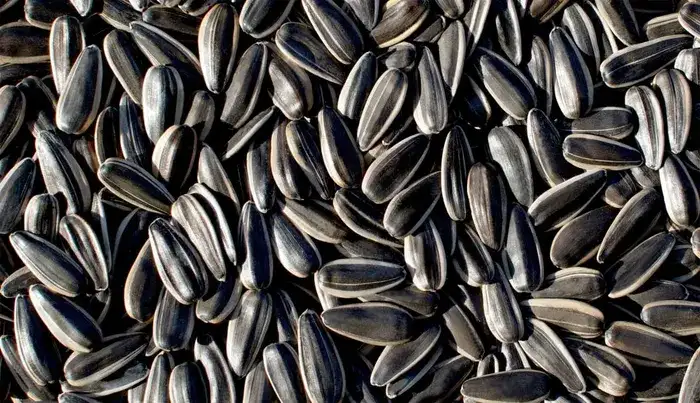
- •Crunchy Sunflower Seed Crusted Chicken — a healthier fried-chicken alternative using ground 363 Series seeds as the coating
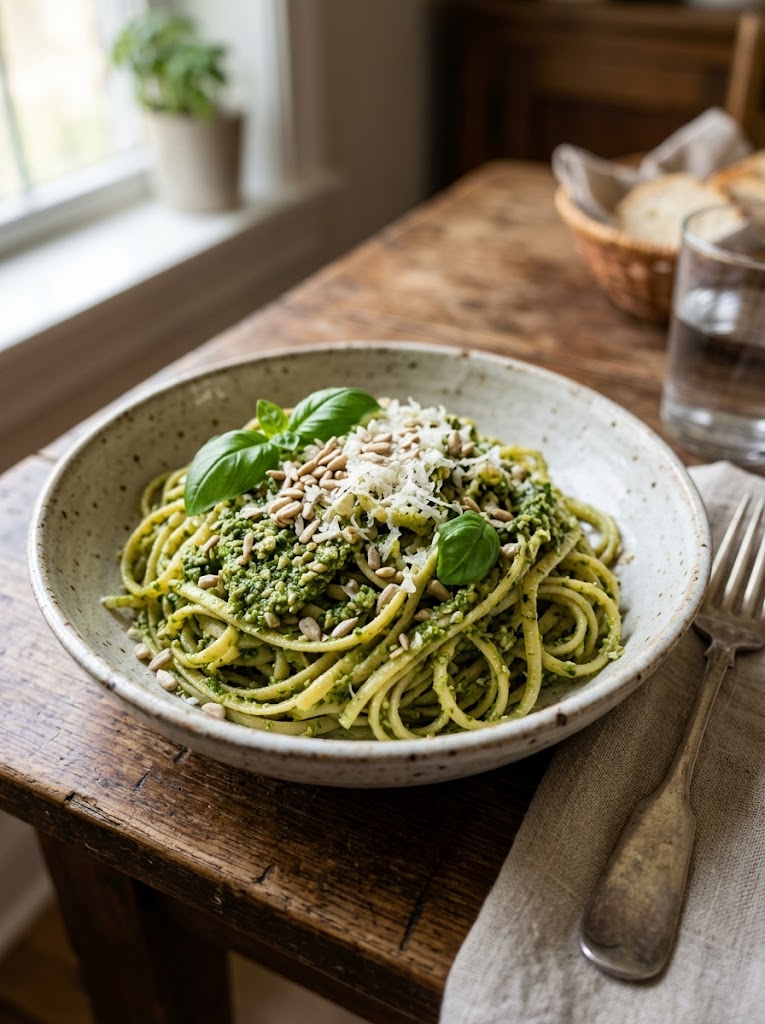
- •Sunflower Seed Pesto — a nutty pasta sauce built on Tongqing No.6 (TQ6) seeds
- •Sunflower Seed Energy Balls — no-bake snacks combining 361 Series seeds with dates, oats, and honey
- •Sunflower Seed Butter — a homemade spread made by processing roasted seeds with oil and honey
- •Sunflower Seed Encrusted Salmon — a crispy fish coating using crushed seeds with Dijon mustard and honey
- •Sunflower Seed Brittle — a sweet candy incorporating seeds into caramelized sugar
- •Sunflower Seed Crusted Goat Cheese Salad — a gourmet salad with warm, seed-crusted cheese
- •Sunflower Seed Oil Vinaigrette — a simple dressing combining seed oil with vinegar and mustard
Why Do Sunflower Seeds Work So Well in These Recipes?
Sunflower kernels bring a naturally nutty flavor and a genuinely dense nutrient profile, including a very high concentration of vitamin E according to USDA FoodData Central. That means a coating, sauce, or topping built on them adds real nutritional value to the dish, not just texture. For the fuller nutritional picture, see our companion guide on sunflower seed nutrition.
Which Sunflower Seed Series Should You Use for Which Recipe?
- •For volume-friendly, everyday cooking — energy balls, brittle, general snacking — 361 Series offers consistent size and value at scale
- •For recipes where texture and appearance matter, like the crusted chicken or salmon coating, 363 Series offers a premium, uniform kernel suited to retail and food-service use
- •For dishes where the seed itself is the visual centerpiece, like the goat cheese salad, Tongqing No.6 (TQ6) offers a larger kernel with a distinct, rich flavor
How Do You Cook With Sunflower Seed Oil?
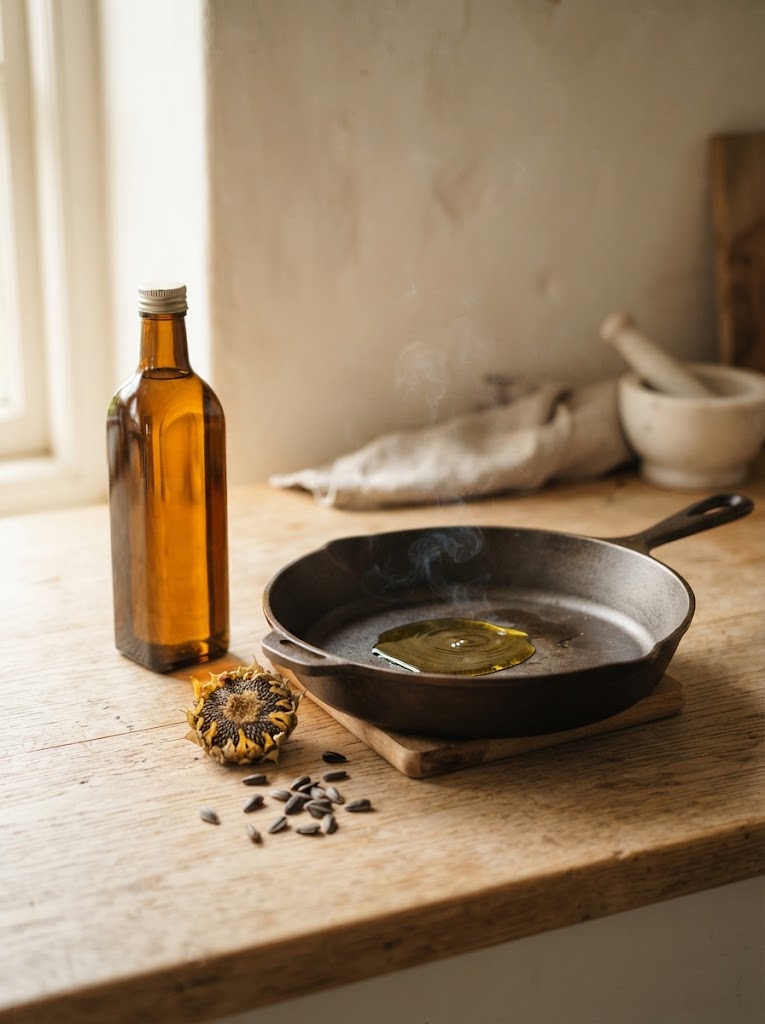
Sunflower seed oil — typically pressed from oil-type sunflower cultivars grown specifically for oil content, a different crop from the confectionery, in-shell seeds we export — is one of the more versatile oils in the kitchen thanks to its mild flavor and high smoke point. See our full breakdown of the confectionery-vs-oil-type distinction for why the two aren't interchangeable from a sourcing standpoint.
Refined sunflower oil has a considerably higher smoke point than unrefined, cold-pressed versions, because refining removes the free fatty acids and impurities that break down first under heat — see the comparison in this smoke point reference for cooking oils. In practice, refined oil is the better choice for stir-frying, deep frying, and roasting, while an unrefined, cold-pressed oil is better reserved for dressings and finishing, where its lower heat tolerance doesn't matter and its fuller flavor comes through.
What Are Eight Ways to Use Sunflower Seed Oil in the Kitchen?
- •Salad dressings — a neutral base that lets other ingredients shine
- •Stir-frying — high smoke point suited to wok cooking, with subtle nutty undertones
- •Baking — can replace butter or other oils for moist results
- •Marinades — helps distribute flavor while tenderizing meat
- •Homemade mayonnaise — a lighter base than many store-bought oils
- •Vegetable roasting — crisp exteriors, tender interiors
- •Smoothies — a source of vitamin E and healthy fats
- •Finishing oil — drizzled over soups, meats, and vegetables for depth of flavor
How Do You Use Sunflower Seeds as a Salad Topping?
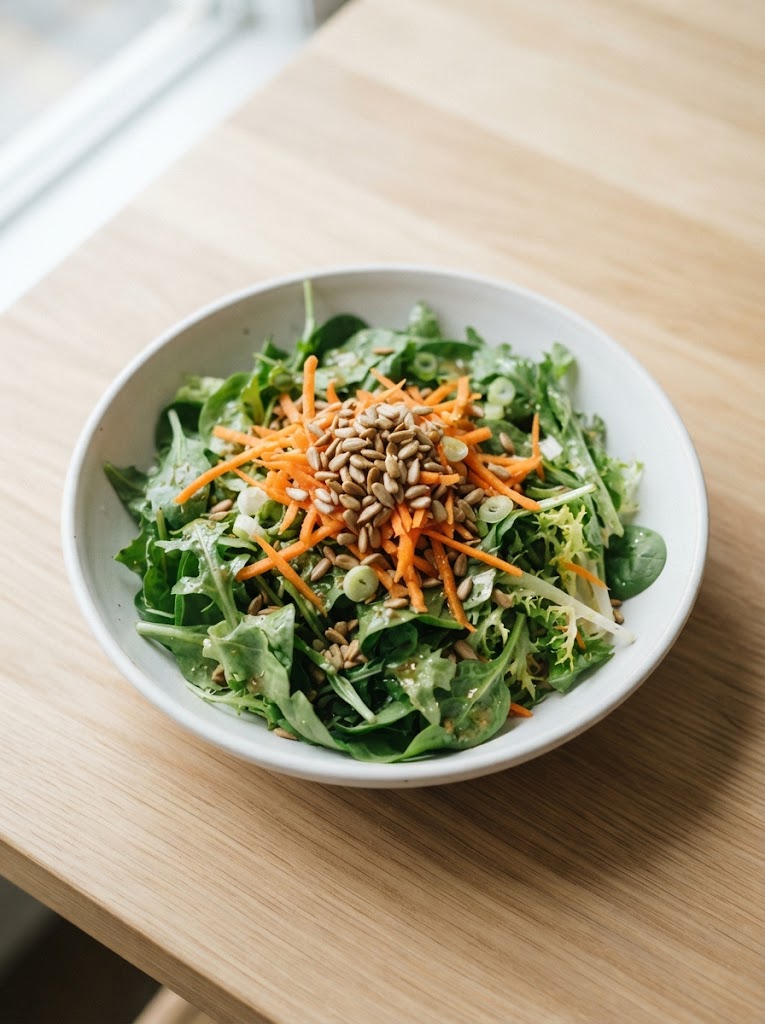
Toast seeds at 350°F for 5-10 minutes, stirring occasionally, to deepen flavor — a similar low-heat approach to the one in this roasted sunflower seed and seasoning guide — and start with 1-2 tablespoons per serving. A handful of sunflower seeds does more for a salad than most toppings — texture, nutrition, and flavor all in one addition.
Kernel size changes how a seed reads on a plate as much as it changes texture: 361 Series offers a smaller, more uniform kernel that distributes evenly across a tossed salad, while Tongqing No.6 (TQ6) has a noticeably larger kernel that works well as a visible, standalone garnish rather than mixed through greens. A kale Caesar with toasted seeds, a Mediterranean quinoa salad, and a roasted beet salad are three easy places to start.
How Do You Keep Sunflower Seeds Fresh Between Recipes?
None of these recipes work well with stale or improperly stored seeds. If you're working through a bulk order over several weeks, our guide on drying and storing sunflower seeds covers the moisture and temperature basics that keep a batch tasting fresh from the first recipe to the last.
Do I need to toast the seeds before using them?
It depends on the dish. Raw kernels work fine in the pesto, butter, and coating recipes, where the cooking process itself (blending, baking, pan-frying) develops flavor. For anything eaten closer to raw — energy balls, salad toppings, brittle — a quick dry-toast at 350°F for 5-8 minutes first makes a noticeable difference in flavor depth and texture.
Can I substitute one series for another in these recipes?
Yes, in most cases — the three series share the same core flavor and nutritional profile, so substitution is mainly about kernel size and appearance rather than taste. The main exception is a recipe where the seed itself is visible and part of the presentation, like the goat cheese salad, where a larger Tongqing No.6 kernel reads differently on the plate than a smaller 361 Series kernel.
Does sunflower oil need to be refrigerated?
No — like most cooking oils, sunflower oil stores fine at room temperature in a cool, dark cabinet away from direct heat or sunlight, which both speed up oxidation. Refrigeration isn't necessary and can cause some oils to cloud or thicken, though that reverses once the oil returns to room temperature.
Where Can You Source Sunflower Seeds for Recipe Development or Retail?
Food brands and product developers testing recipes at scale — whether for a retail snack line, a food-service application, or a private-label product — can request samples and a specification sheet across all three whole-seed series to find the right fit before committing to a bulk order. For a deeper dive into two specific recipes, see our guide to sunflower seed pesto and seed butter.
Featured in This Article
Sourcing Sunflower Seeds for Your Business?
Contact XingYi Trading for pricing, samples, and specification sheets on our 361, 363, and TQ6 series.
Request a Quote
James Feng
XingYi Trading — Bayannur, Inner Mongolia