Sunflower Seed Pesto and Seed Butter: Two Recipes Worth Making
Our 363 Series turned into a nutty pesto and a nut-free seed butter — recipes, food-safety notes, and how each compares nutritionally to the traditional alternative.
- 1. How Do You Make Sunflower Seed Pesto?
- 2. What Food Safety Precautions Apply to Garlic-in-Oil Pesto?
- 3. How Do You Make Sunflower Seed Butter?
- 4. Is Sunflower Seed Butter a Genuine Nut-Free Alternative?
- 5. Why does homemade seed butter sometimes turn green?
- 6. Can I make either recipe nut-free for a food-allergy household?
- 7. What Changes When You Scale Either Recipe Up for Retail or Food-Service Production?
- 8. Where Can You Source 363 Series or Tongqing No.6 for Product Development?
Beyond snacking and coatings, sunflower seeds turn into two kitchen staples in their own right: a pesto that substitutes for pine nuts, and a butter that substitutes for peanut or tree-nut spreads. Both start with the same 363 Series or Tongqing No.6 kernel, prepared two different ways.
How Do You Make Sunflower Seed Pesto?
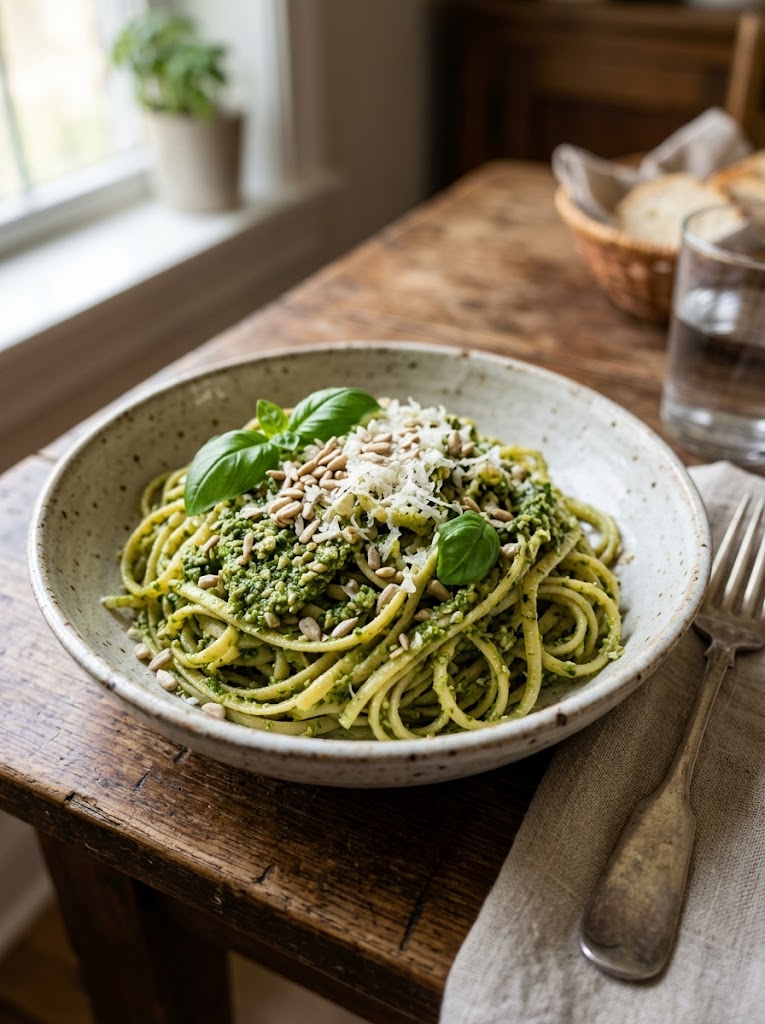
Pine nuts have long been the traditional base for pesto, but they're expensive, slow to produce, and increasingly affected by supply shortages. 363 Series sunflower seeds make a genuinely good substitute — nutty, rich, and far more consistent in supply and price.
- •1 cup 363 Series sunflower seeds
- •2 cups fresh basil leaves
- •3 garlic cloves
- •1/2 cup grated Parmesan cheese
- •1/4 cup sunflower seed oil
- •2 tablespoons lemon juice
- •Salt and pepper to taste
Blend all ingredients until smooth, adjusting oil for consistency. The 363 Series' rich, nutty flavor gives the sauce depth without overpowering the basil.
Sunflower seed pesto compares favorably to traditional pine-nut versions on nutrition — higher in vitamin E and magnesium per USDA nutrient data, with comparable healthy fats and protein. It also has a lighter environmental footprint: an annual crop versus pine trees that take 15-25 years to mature.
What Food Safety Precautions Apply to Garlic-in-Oil Pesto?
Because this pesto combines raw garlic with oil in a low-acid mixture, it needs the same food-safety handling as any garlic-in-oil preparation. According to USDA food safety guidance, garlic-in-oil mixtures should be refrigerated and used within about a week, since low-oxygen, low-acid conditions at room temperature can support the growth of Clostridium botulinum.
Refrigerated in an airtight container, the pesto keeps about a week. Freezing in small batches is the safer option for longer storage — up to three months, with a layer of oil on top to help preserve freshness.
How Do You Make Sunflower Seed Butter?
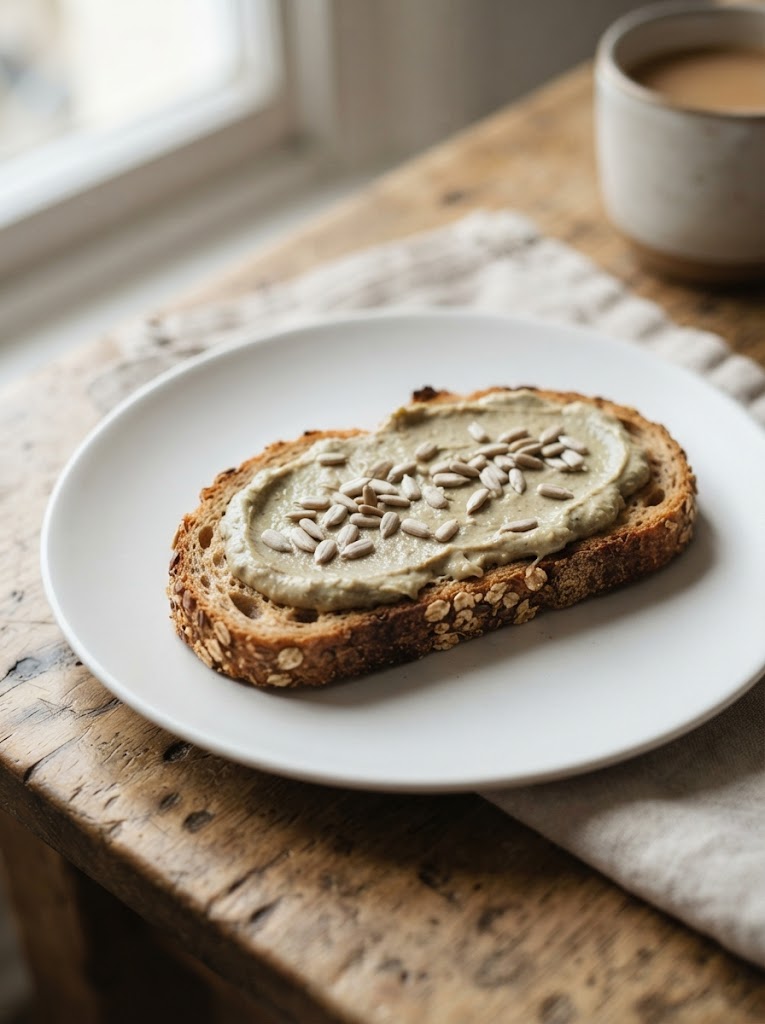
Sunflower seed butter has grown from a niche nut-allergy substitute into a mainstream pantry staple in its own right, and it's straightforward to make at home.
- •Select premium seeds — 363 Series or Tongqing No.6 work well
- •Roast at 300-350°F for 10-25 minutes depending on desired flavor
- •Blend for 10-15 minutes until a smooth paste forms
- •Customize with salt, honey, cinnamon, or vanilla
- •Store refrigerated in an airtight container for up to a month, or frozen for up to six months
Is Sunflower Seed Butter a Genuine Nut-Free Alternative?
Yes — sunflower seed butter contains no tree nuts or peanuts, which is why it has become a standard substitute in nut-free schools and households. Food allergies affect a meaningful share of children: the CDC's most recent data puts diagnosed food allergies at around 5% of children in the United States, with peanut and tree-nut allergies among the most common.
It holds up nutritionally, too. A nutritional comparison published in a peer-reviewed sensory and consumer analysis of sunflower seed butter found it holds its own against nut butters on multiple minerals, alongside its well-established vitamin E and healthy fat content.
Why does homemade seed butter sometimes turn green?
A greenish tint can appear when the chlorogenic acid naturally present in sunflower seeds reacts with baking soda or other alkaline ingredients — it's a harmless chemical reaction, not spoilage, and doesn't affect flavor or safety. It's more likely to show up in baked goods made with seed butter than in the butter itself eaten plain.
Can I make either recipe nut-free for a food-allergy household?
Both recipes as written contain no tree nuts, since sunflower seeds are the only seed or nut ingredient in either — the pesto substitutes for pine nuts and the butter for peanut or tree-nut spreads. That makes both a useful option for households or food-service kitchens managing nut allergies.
What Changes When You Scale Either Recipe Up for Retail or Food-Service Production?
A home-kitchen batch and a production run share the same ratios, but scaling introduces variables a single-batch recipe doesn't have to account for. Roast time and temperature that work in a small home oven don't translate directly to a commercial convection oven or industrial roaster — batch size, airflow, and load density all shift the actual time needed to hit the same internal color and flavor development, so a production kitchen typically runs small validation batches before committing to a full run.
Consistency of the raw kernel matters more at scale, too. A home cook can compensate for slight size variation in a one-cup batch by eye; a production line blending hundreds of kilograms needs a kernel that grades consistently batch to batch, which is one reason food brands developing a packaged pesto or seed-butter product typically specify a graded series rather than an ungraded raw seed. Shelf-stability testing also becomes a formal requirement rather than a household guideline once a product is headed for retail distribution, since a commercial product needs a validated shelf life backed by real testing, not just "keeps about a week refrigerated."
Where Can You Source 363 Series or Tongqing No.6 for Product Development?
Food brands developing a packaged pesto, seed butter, or similar product for retail or nut-free school programs can compare our 363 Series and Tongqing No.6 grade specifications, or request samples and a specification sheet to test which kernel roasts and blends best for their formulation. For more ways to cook with whole seeds, see our complete cooking guide.
Featured in This Article
Sourcing Sunflower Seeds for Your Business?
Contact XingYi Trading for pricing, samples, and specification sheets on our 361, 363, and TQ6 series.
Request a Quote
James Feng
XingYi Trading — Bayannur, Inner Mongolia