
BRC vs. IFS: Food Safety Certifications Sunflower Seed Buyers Should Ask About
Two of the most commonly requested GFSI-recognized certifications, what actually differs between them, and why the right one depends on your specific destination market.
- 1. What Do the Key Terms Mean?
- 2. What Do BRC and IFS Actually Certify?
- 3. Do BRC and IFS Use the Same Scoring System?
- 4. Which One Should a Buyer Ask a Supplier About?
- 5. What Does an Unannounced Audit Mean, and Does It Matter?
- 6. Should a Buyer Accept Either Certification, or Insist on a Specific One?
- 7. What Should You Ask a Supplier About Their Certification?
- 8. Does XingYi Trading Hold BRC or IFS Certification?
- 9. Are There Other GFSI-Recognized Schemes Besides BRC and IFS?
- 10. How Often Does a Facility Need to Renew Its Certification?
- 11. Does Certification Guarantee a Supplier Has No Quality Issues?
- 12. How Does IFS Food Scoring Work in Numbers?
- 13. How Is the IFS Certificate Period Calculated?
- 14. What Should You Check on the Certificate Itself?
- 15. What Are the Limits of This Guide?
- 16. Where Do These Numbers Come From?
- 17. Ask About Our Certifications
BRC and IFS come up constantly in buyer questionnaires, and it's easy to treat them as interchangeable since both are GFSI-recognized. They're not identical, here's what actually differs, and why the right one to ask about depends on your specific market.
What Do the Key Terms Mean?
GFSI is the Global Food Safety Initiative, a benchmarking body: it does not provide certification itself, and a GFSI-recognised scheme is one that meets its benchmarking requirements (GFSI).
BRCGS and IFS Food are two certification schemes, each owned by its own organisation and audited by accredited certification bodies.
Certificate scope is the list of sites, products and processes that a certificate actually covers, which is not always the same as the supplier's whole business.
What Do BRC and IFS Actually Certify?
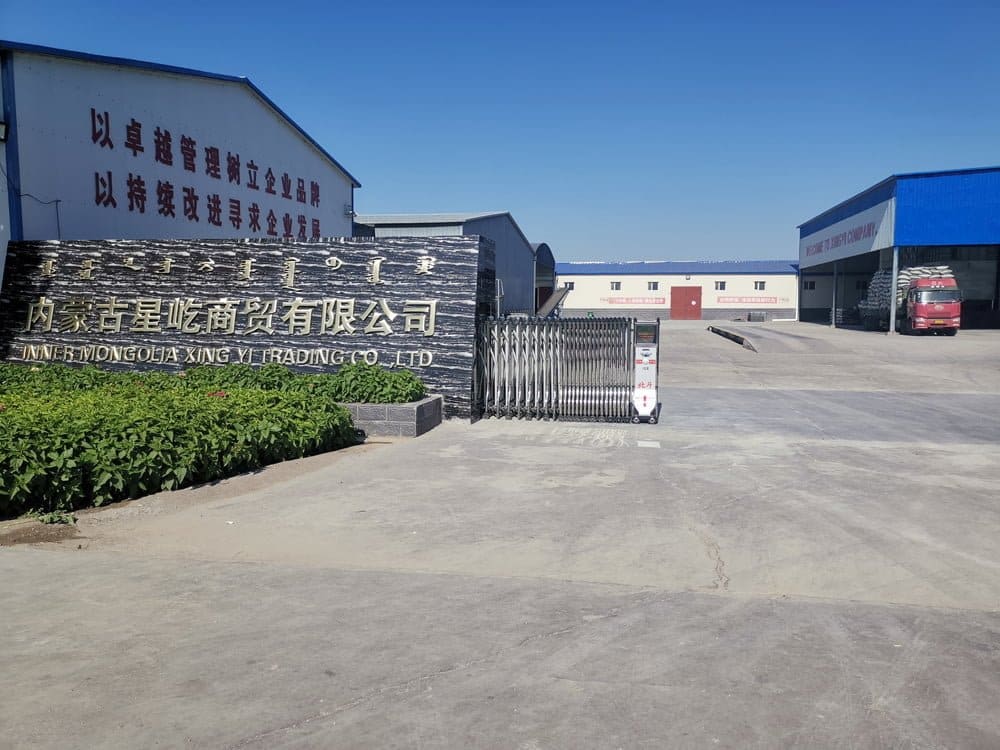
Both are GFSI-recognized food safety certification schemes: both appear on GFSI's list of recognised schemes, so each has been benchmarked against GFSI's requirements. GFSI itself isn't a certification, it's a benchmarking framework that BRC, IFS, and a handful of other schemes are measured against. A supplier holding either has been benchmarked by GFSI, but the two standards differ, so read each certificate against the standard it names.
Do BRC and IFS Use the Same Scoring System?
No. IFS Food scores an audit as a percentage and awards a level (IFS Food v8 standard), while BRCGS grades audits differently, so read the grade from the certificate itself. If you're comparing two suppliers' certification results directly, confirm which scheme each one holds before assuming the grades are directly comparable, they aren't the same scale.
Which One Should a Buyer Ask a Supplier About?
It depends heavily on your destination market: [ask which scheme your own customers or retailers require, since the answer differs by customer. Ask your own retail customers which scheme they require, since the answer differs by customer and by market. A supplier holding neither the specific one your market expects isn't necessarily lower quality, but it may mean an additional step to satisfy your own retail customers' requirements.
What Does an Unannounced Audit Mean, and Does It Matter?
An unannounced audit is carried out without the facility being told the date in advance, so it shows how the facility runs on an ordinary day. Ask the supplier whether its audit was announced or unannounced. An unannounced-audit result, where available, can be a stronger signal of consistent compliance than an announced one, in our judgment.
Should a Buyer Accept Either Certification, or Insist on a Specific One?
In general, either GFSI-recognized scheme demonstrates a real, audited food safety management system, insisting on one specific scheme over the other usually matters only when your own retail customers have a stated requirement. If you're not sure what your customers expect, it's worth checking before you rule out an otherwise well-qualified supplier over scheme choice alone.
What Should You Ask a Supplier About Their Certification?
Ask which specific scheme they hold, request a copy of the actual current certificate (not just a claim), and confirm the certificate's expiration date and grade/score. This is the same pattern covered in our guide to what to ask a sunflower seed supplier, a real certification holder shares this without hesitation.
Does XingYi Trading Hold BRC or IFS Certification?
Our confirmed certification is ISO 22000. Ask us for the current certificate when you request a quote. This is general information, not legal or compliance advice; confirm your destination market's specific retail requirements with your own compliance team or the retailer directly.
Are There Other GFSI-Recognized Schemes Besides BRC and IFS?
If a supplier holds a GFSI-recognized scheme other than the one you initially asked about, it's still worth understanding, since GFSI benchmarks schemes against its requirements.
How Often Does a Facility Need to Renew Its Certification?
An IFS Food certificate has 12-month validity, and BRCGS certificate cycles can differ by grade, so check the dates printed on each certificate; both require a re-audit to maintain certification, this is why confirming the current expiration date on a certificate matters, not just whether a supplier has ever held the certification. A certificate that expired months ago and hasn't been renewed is a materially different situation than an active, current one, even though both might come up in casual conversation as "we're BRC certified."
Does Certification Guarantee a Supplier Has No Quality Issues?
No, certification confirms a facility's food safety management system meets an audited standard at the time of the audit, not that every batch produced will be flawless. It's a strong baseline signal, but it complements rather than replaces the batch-specific verification covered in our third-party inspection and supplier self-audit guides.
How Does IFS Food Scoring Work in Numbers?
The IFS Food standard, version 8, gives clear thresholds. A total score of 95% or more passes at the Higher Level with a 12-month certificate, and a score of at least 75% and below 95% passes at the Foundation Level, also with a 12-month certificate. A single Major non-conformity with a total score of at least 75% leads to a follow-up audit, and more than one Major, or a total score below 75%, fails the audit (IFS Food version 8).
| IFS Food result (version 8) | Outcome |
|---|---|
| Total score 95% or more | Passed at Higher Level; 12-month certificate |
| Total score 75% to below 95% | Passed at Foundation Level; 12-month certificate |
| One Major non-conformity, score 75% or more | Follow-up audit within six months; certificate if solved |
| More than one Major, or score below 75% | Not passed; new initial audit |
How Is the IFS Certificate Period Calculated?
The IFS certificate starts on its issue date and ends on the last day of the initial audit date plus eight weeks, minus one day, plus one year, and the recertification audit window runs from eight weeks before to two weeks after the due date (IFS Food version 8). In practice the expiry date on the certificate is what matters, and a buyer should note it in the supplier file.
What Should You Check on the Certificate Itself?
- •The scheme and its issue or version number.
- •The site name and address, which must match the facility that packs your seed.
- •The scope, including product categories, and whether it covers the process you need.
- •The grade or score and the issue and expiry dates.
- •The name of the accredited certification body that issued it.
What Are the Limits of This Guide?
The scheme details come from the standard owners and GFSI pages where we could check them, and BRCGS grading and certificate cycles should be confirmed on the certificate itself. A certificate describes a site's management system at the audit date, not each lot.
Where Do These Numbers Come From?
- •GFSI: certification - GFSI benchmarks schemes and does not issue certificates itself. Checked October 2026.
- •GFSI recognised certification programme owners, August 2024 - which schemes are recognised. Checked October 2026.
- •IFS Food version 8 standard - scoring bands, certificate validity and treatment of major non-conformities. Checked October 2026.
Ask About Our Certifications
Request samples (the buyer pays shipping) and ask directly about current food safety certifications for your order. Product details are on our products page, and the full buying process is in our bulk sunflower seeds buyer's guide.
Featured in This Article
Sourcing Sunflower Seeds for Your Business?
Contact XingYi Trading for pricing and samples (the buyer pays shipping) on our 361, 363, and TQ6 series.
Request a Quote
XingYi Trading
XingYi Trading — Bayannur, Inner Mongolia
More in Quality & Sourcing
 Quality & Sourcing
Trade Shows, Marketplaces, or Direct From the Factory: How to Verify a Sunflower Seed Supplier No Matter Where You Found Them
 Quality & Sourcing
Sunflower Seed Nutrition Facts for Your Private-Label Packaging
 Quality & Sourcing