
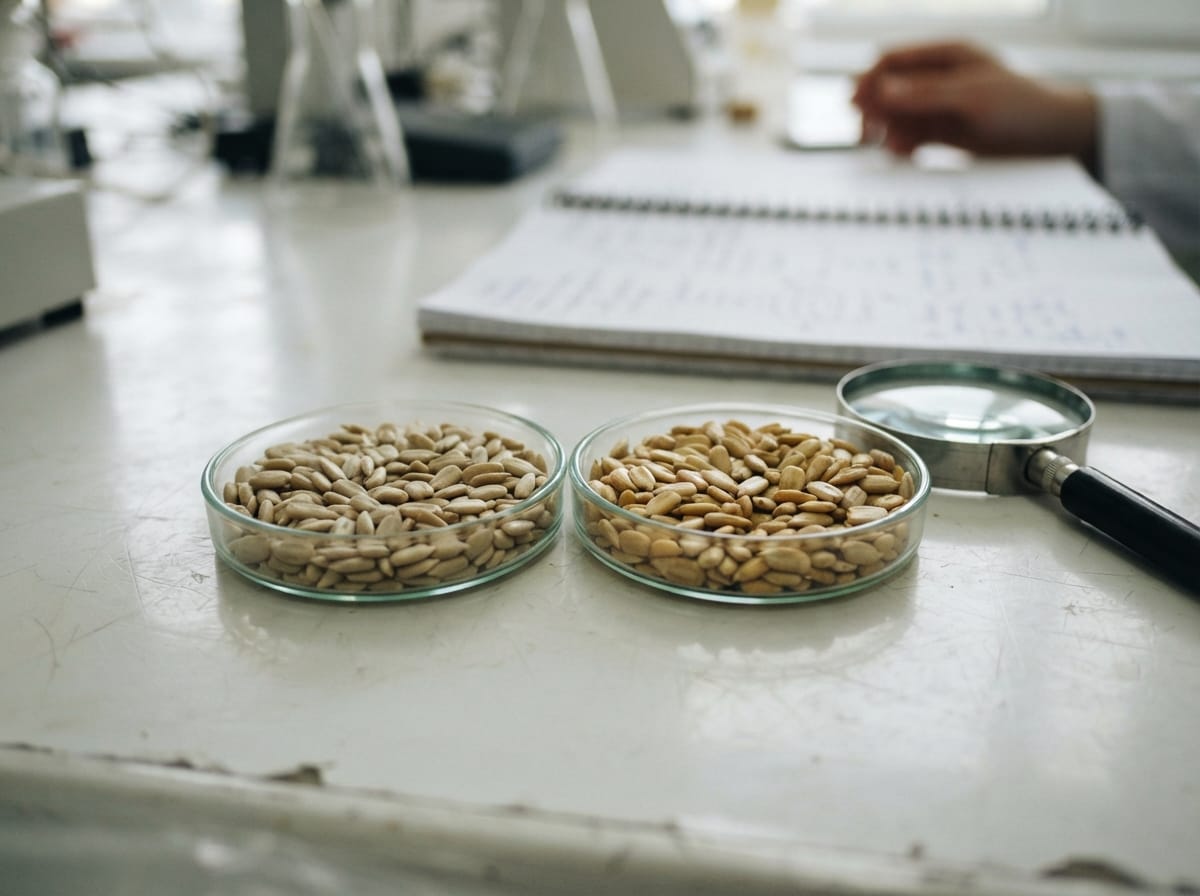
How Buyers Verify They're Getting Real Confectionery Sunflower Seeds, Not Mislabeled Product
Food fraud isn't limited to high-value commodities like olive oil or honey — here's what buyers can actually check to confirm a sunflower seed shipment is what it's labeled as.
- 1. What Counts as Food Fraud in a Sunflower Seed Shipment?
- 2. How Does U.S. Import Law Address This?
- 3. What Testing Methods Can Verify Authenticity?
- 4. What Can a Buyer Check Without Lab Testing?
- 5. Should Every Shipment Get Independent Testing?
- 6. How Does Supplier Vetting Reduce Fraud Risk Upfront?
- 7. What Should You Ask a Supplier About Their Own Fraud-Prevention Controls?
- 8. Does Country-of-Origin Mislabeling Happen in This Industry?
- 9. How Does Batch Traceability Actually Protect a Buyer?
- 10. Is Fraud Risk Different for a First Order Versus a Repeat Order?
- 11. Does Private-Label Packaging Add Its Own Fraud Risk?
- 12. Source With Verified Product Integrity
Food fraud discussions usually center on high-value commodities — olive oil, honey, spices — but the same underlying question applies to any food ingredient: is this actually what the label says it is? Here's what a sunflower seed buyer can realistically check.
What Counts as Food Fraud in a Sunflower Seed Shipment?
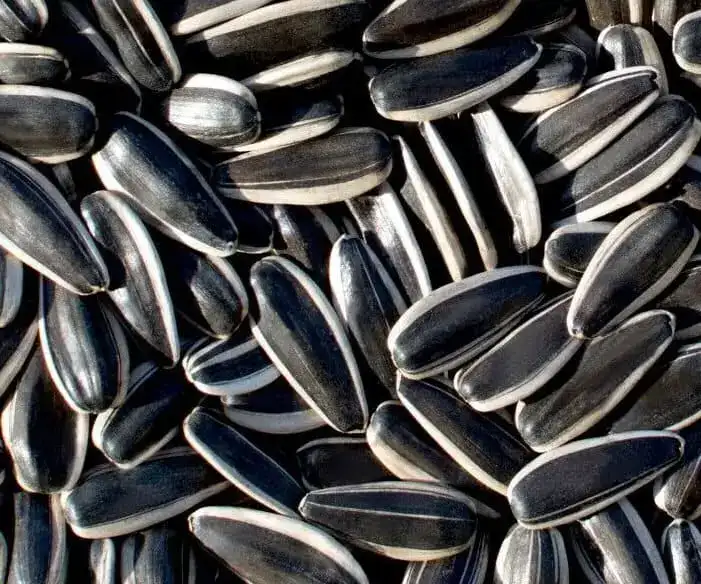
The most relevant risks for this specific product are mislabeling — claiming a lower grade or different series is a premium one, misrepresenting country or region of origin, or blending batches of inconsistent quality and presenting them as uniform. This is a narrower risk category than the adulteration/dilution concerns that dominate food fraud discussion for liquid commodities, but it's still worth a buyer's attention.
How Does U.S. Import Law Address This?
The FSVP rule requires importers to verify that foreign suppliers have controls in place to prevent intentional adulteration, which includes certain categories of food fraud — this is one of the reasons FSVP compliance (covered in our dedicated FSVP guide) isn't purely a paperwork exercise; it's tied to genuine product-integrity verification.
What Testing Methods Can Verify Authenticity?
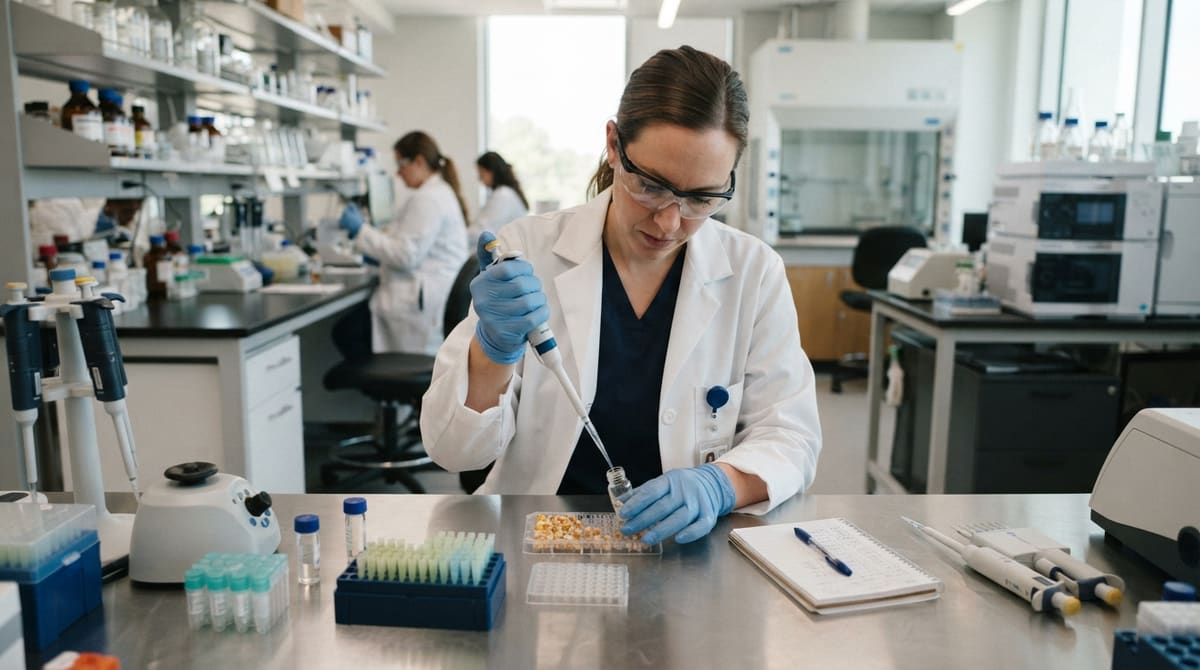
For agricultural commodities generally, DNA-based testing and isotopic analysis are the established methods for confirming species/variety identity and detecting adulteration, and independent testing labs like SGS offer this alongside standard food-safety testing. These are more commonly applied to higher-fraud-risk commodities, but the same independent lab testing infrastructure (covered in our non-GMO and pesticide residue testing guide) can be used to verify a sunflower seed shipment if a buyer has specific concerns.
What Can a Buyer Check Without Lab Testing?
- •Compare the shipment against an approved sample kept from before the order — visual size, color, and shell-pattern consistency
- •Request the supplier's own grading and moisture-testing records for the specific batch, not a generic spec sheet
- •Confirm the certificate of origin matches what was represented during sourcing
- •For repeat orders, compare consistency against previous shipments from the same supplier
Should Every Shipment Get Independent Testing?
Not necessarily — for an established supplier relationship with a consistent track record, visual and documentation checks are often sufficient for routine reorders. Independent testing is more commonly used for a first order, a supplier switch, or when a specific concern arises, which mirrors the guidance in our third-party inspection guide.
How Does Supplier Vetting Reduce Fraud Risk Upfront?
The single biggest fraud-risk reduction happens before you ever place an order: working with a supplier who has a verifiable operating history, real references, and transparent documentation dramatically lowers the odds of intentional mislabeling compared to sourcing from an unverified, anonymous listing. See our guide to what to ask a supplier for the vetting questions that matter here.
What Should You Ask a Supplier About Their Own Fraud-Prevention Controls?
Ask directly whether they test incoming raw material against their own supplier declarations, how they prevent batch mixing during processing, and whether they can provide traceability back to a specific harvest lot if a question arises later. A supplier with nothing to hide should answer this without hesitation.
Does Country-of-Origin Mislabeling Happen in This Industry?
It's a documented risk category across agricultural commodities generally — a shipment genuinely grown in one country being represented as originating from another, sometimes to access more favorable trade or tariff treatment. For sunflower seed specifically, the certificate of origin is the primary document a buyer relies on, which is exactly why confirming it matches what was represented during sourcing (covered above) matters, and why working with an established, verifiable exporter rather than an unfamiliar intermediary reduces this risk meaningfully.
How Does Batch Traceability Actually Protect a Buyer?
Traceability means a supplier can connect a specific shipment back to the harvest lot, processing date, and inspection records that produced it — if a quality or authenticity question ever arises after a shipment has already reached you, this is what lets the question actually get answered rather than becoming a dispute with no way to verify either side's account. Ask whether a supplier's traceability records go back to the specific batch level or only to a broader production period, since the level of detail varies meaningfully between suppliers.
Is Fraud Risk Different for a First Order Versus a Repeat Order?
Meaningfully, yes — fraud risk is concentrated much more heavily in first-time, unverified supplier relationships than in an established relationship with a documented track record. This is one more reason the vetting work covered in our self-audit checklist matters most before your first order, rather than being treated as a formality to get through quickly.
Does Private-Label Packaging Add Its Own Fraud Risk?
It can, in a different way — once a product is repackaged under your own brand, any mislabeling upstream (wrong series, wrong origin) becomes your company's labeling claim rather than the supplier's, which is one more reason verifying the underlying product before it goes into your own packaging matters more, not less, for a private-label buyer. Confirming your supplier's own internal batch records at the point of production, rather than relying solely on a spec sheet delivered alongside the finished shipment, gives you a documented basis to stand behind your own label's claims if a question ever arises after the product has already reached retail.
Source With Verified Product Integrity
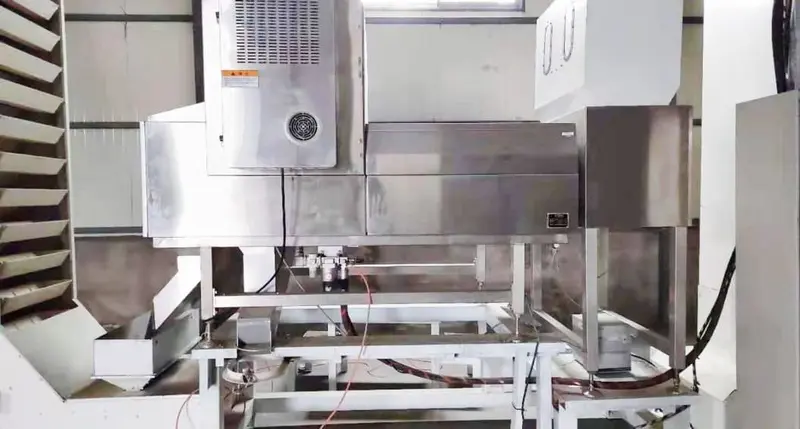
XingYi Trading maintains batch-level records through our 16-stage inspection line. Request samples and a specification sheet to compare against your own verification process.
Featured in This Article
Sourcing Sunflower Seeds for Your Business?
Contact XingYi Trading for pricing, samples, and specification sheets on our 361, 363, and TQ6 series.
Request a Quote
James Feng
XingYi Trading — Bayannur, Inner Mongolia
More in Quality & Sourcing
Quality & SourcingNon-GMO Status and Pesticide-Residue Testing: What Sunflower Seed Buyers Should Ask About
 Quality & Sourcing
How Long Do Sunflower Seeds Stay Fresh? Shelf Life for Bulk and Redistribution Buyers
 Quality & Sourcing