
What to Put in a Sunflower Seed Supply Contract: Terms Experienced Buyers Insist On
Price and quantity are the easy part. Here's what experienced buyers actually put in writing to protect a sunflower seed supply relationship over multiple orders.
- 1. What Do the Key Terms Mean?
- 2. What Should a Sunflower Seed Supply Contract Cover Beyond Price and Quantity?
- 3. Why Does a Detailed Product Specification Matter More Than It Seems?
- 4. What Should the Contract Say About a Shipment That Doesn't Match the Sample?
- 5. Should Pricing Be Fixed for the Contract Term, or Allowed to Adjust?
- 6. What Insurance or Liability Terms Are Relevant?
- 7. Should a Force Majeure Clause Address Something Specific to This Industry?
- 8. Does a Contract Need to Address Termination Terms?
- 9. Should a Contract Specify How Disputes Get Resolved?
- 10. Does a Private-Label Agreement Need Confidentiality or IP Terms?
- 11. How Often Should an Existing Supply Contract Be Reviewed or Updated?
- 12. Who Should Review a Supply Contract Before You Sign It?
- 13. Which Quality Limits Are Realistic to Write Into the Specification?
- 14. How Should Weights and Units Be Written?
- 15. How Should a Contract Define a Shortfall?
- 16. What Test Methods and Sampling Should the Contract Name?
- 17. How Should You Review a Draft Contract?
- 18. Where Do These Numbers Come From?
- 19. Discuss a Supply Agreement
A basic purchase order covers price, quantity and delivery. A supply agreement also covers what happens when something does not go as planned: quality disputes, delays, short shipments and changes in price. This guide lists the terms an experienced buyer adds beyond the basics, and the questions to settle before signing. It is general information, not legal advice.
What Do the Key Terms Mean?
A specification is the written list of quality factors, limits and test methods that each lot must meet, and it is the part of a contract that decides a quality dispute.
An Incoterm is a standard trade term, issued by the International Chamber of Commerce, that sets who bears cost and risk at each stage; there are 11 rules in the current set (trade.gov).
Force majeure is a clause that excuses a party from performance after events outside its control, and its wording decides whether a short crop or a shipping delay counts.
What Should a Sunflower Seed Supply Contract Cover Beyond Price and Quantity?
- •Detailed product specification, series, grade, moisture/purity thresholds, and form (raw/roasted, in-shell/kernel)
- •Packaging format and any private-label/branding requirements
- •Delivery schedule, lead times, and destination port
- •Payment terms and the exact trigger for balance payment
- •What happens if a shipment doesn't match the approved sample
- •Force majeure provisions
Why Does a Detailed Product Specification Matter More Than It Seems?
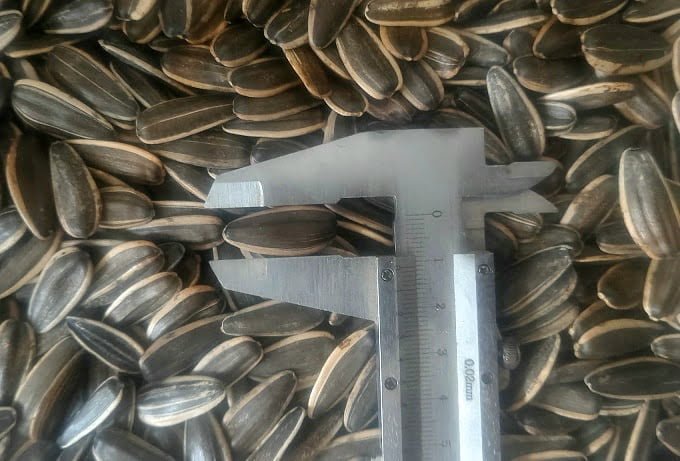
A product specification is the detailed, objective description of what you're actually buying, without one written into the agreement, "sunflower seeds" alone leaves grade, moisture content, and purity thresholds open to interpretation if a dispute arises. Referencing your agreed spec sheet directly in the contract closes that gap.
What Should the Contract Say About a Shipment That Doesn't Match the Sample?
This is worth addressing explicitly before you need it, not after a problem occurs, specify how sample-matching will be verified (independent testing, agreed tolerance ranges) and what remedy applies if a shipment falls outside those tolerances (replacement, credit, partial refund). Leaving this undefined means negotiating remedies from scratch during an actual dispute, which is a worse position for both sides.
Should Pricing Be Fixed for the Contract Term, or Allowed to Adjust?
Agreements covering an extended period can include provisions for price adjustment tied to specific triggers, raw material cost shifts, seasonal harvest pricing changes, or freight rate movements, rather than a single fixed price for the full term. A fixed price protects the buyer from cost increases but can also mean a supplier pushes back on volume commitments if market prices move significantly against them; an adjustment mechanism tied to a transparent index is often a more durable structure for a multi-order relationship.
What Insurance or Liability Terms Are Relevant?
For food products specifically, confirm the contract addresses product liability coverage and includes a warranty that the product meets food safety regulations applicable to your destination market. This is a common clause in supply agreements (our judgment) and worth confirming explicitly rather than assuming it's implied.
Should a Force Majeure Clause Address Something Specific to This Industry?
A general force majeure clause (covering events like natural disasters or major supply chain disruptions) is standard, but for sunflower seed sourcing from China specifically, it's worth confirming how the clause treats predictable seasonal disruptions like the Chinese New Year factory shutdown, that's a known, recurring event rather than a true force majeure surprise, so a well-drafted contract should distinguish planned seasonal timing from genuine unforeseeable disruption.
Does a Contract Need to Address Termination Terms?
Yes, even in a relationship you expect to be long-term, specifying the conditions and notice period for either party to exit the agreement avoids ambiguity if circumstances change. This isn't a sign of distrust; it is common commercial practice (our judgment) in any ongoing supply relationship.
Should a Contract Specify How Disputes Get Resolved?

Yes, specifying a dispute resolution method (arbitration venue, governing law, and language) upfront avoids a much harder negotiation over jurisdiction if a real disagreement ever arises. For cross-border agreements between a US or EU buyer and a China-based supplier, international arbitration under a recognized body is one option, and a lawyer can say whether it suits your contract from either party's home country.
Does a Private-Label Agreement Need Confidentiality or IP Terms?
Yes, if you're sharing proprietary packaging designs, branding, or a custom specification, a basic confidentiality clause protecting your private-label artwork and formulation details, and clear language confirming you retain ownership of your own branding, is standard practice and worth including even in an otherwise simple agreement. See our private-label sourcing guide for how artwork ownership typically works in practice.
How Often Should an Existing Supply Contract Be Reviewed or Updated?
Annually is a reasonable default for an ongoing relationship, or whenever a material change occurs, a significant volume shift, a new product spec, or a pricing renegotiation. Treating a supply contract as a living document that gets revisited periodically, rather than a one-time document signed and forgotten, keeps it actually useful as the relationship evolves.
Who Should Review a Supply Contract Before You Sign It?
For a first significant contract with a new supplier, having a lawyer familiar with international trade or food-industry supply agreements review it before signing is a reasonable investment, particularly for the dispute-resolution, liability, and force majeure sections where the cost of an ambiguous clause is highest. This doesn't need to happen for every routine reorder once a relationship is established, but it's worth it for the initial agreement that sets the terms everything else builds on.
Buyers without in-house legal counsel sometimes skip this step to save time or cost on a first order, reasoning that the relationship is still small enough that a dispute is unlikely, but the terms agreed at the start of a relationship tend to carry forward into every subsequent order under the same contract, so an ambiguity that seemed minor at signing can matter considerably more once volume has scaled up.
Which Quality Limits Are Realistic to Write Into the Specification?
A limit that sits outside what the market delivers in a normal year invites disputes. The NSA's five-year record for US confection seed is a rough guide to variation, not a standard, and the ranges below show how far a measure can move (NSA 2024 Crop Quality Report).
| Measure (US nonoil seed) | Lowest year | Highest year |
|---|---|---|
| Moisture (%) | 8.9 | 10.7 |
| Foreign material (%) | 11.6 | 12.8 |
| Seeds over 20/64 (%) | 80.2 | 85.4 |
| Test weight (lb/bu) | 21.1 | 24.0 |
How Should Weights and Units Be Written?
State the quantity in metric tonnes and the bag weight in kilograms, and say whether weights are net or gross. A metric ton is 1,000 kg, a short ton is 907.18 kg and a long ton is 1,016.05 kg (NIST Handbook 44), so an unmodified 'ton' can mean three different weights. Our guide to metric and short tons works through the conversions.
How Should a Contract Define a Shortfall?
Define it as delivered quantity below a stated share of the scheduled quantity, state the notice the supplier must give, and say what the buyer may do, such as buying elsewhere without penalty. The US record shows why: confection output fell by about 33% in 2024 after rising the two years before (NSA 2024 Crop Quality Report, calculated), so a clause written only for a normal year may not hold in a short one.
What Test Methods and Sampling Should the Contract Name?
- •The method for moisture, foreign material and size, and the laboratory that will run it.
- •How many samples are drawn, from which part of the lot, and by whom.
- •Which test result governs if two laboratories disagree.
- •Who pays for a retest, and the time limit for raising a claim.
- •The reference sample that the lot is compared with.
How Should You Review a Draft Contract?
Read the draft against your own order specification, line by line, and mark every place where the contract is silent on something the specification names. Silence is the main risk, because a term that is not written down has to be argued from memory when something goes wrong. Ask a lawyer who knows your market to review the final text.
Keep the signed version, and note the date of any later change to it.
Where Do These Numbers Come From?
- •trade.gov: Know your Incoterms - what Incoterms are and who issues them. Checked 2026-10-23.
- •NSA 2024 Crop Quality Report - moisture, test weight and production figures for US confection seed. Checked October 2026.
- •NIST Handbook 44, Appendix C - unit definitions for pounds, tons and bushels. Checked October 2026.
Discuss a Supply Agreement
Request a quote and contact us with your requirements rather than a single order. Product details are on our products page, and the full buying process is in our bulk sunflower seeds buyer's guide.
Featured in This Article
Sourcing Sunflower Seeds for Your Business?
Contact XingYi Trading for pricing and samples (the buyer pays shipping) on our 361, 363, and TQ6 series.
Request a Quote
XingYi Trading
XingYi Trading — Bayannur, Inner Mongolia
More in Importing & Trade
 Importing & Trade
FDA Prior Notice: What It Is and How to File It Before Your Shipment Arrives
 Importing & Trade
FSVP Explained: What FDA's Foreign Supplier Verification Program Means for Sunflower Seed Importers
 Importing & Trade