How Seasonal Harvest Timing Affects Sunflower Seed Availability and Pricing
When sunflower harvest happens in Inner Mongolia, and how that timing shapes availability and pricing through the rest of the marketing year.
- 1. When Is Sunflower Harvest Season in Inner Mongolia?
- 2. Does Weather Variability Affect Availability Beyond the Normal Seasonal Pattern?
- 3. How Does Carryover Stock From the Previous Season Affect Pricing?
- 4. How Far in Advance Should Buyers Plan Around Harvest Timing?
- 5. Should Buyers Time Orders Around Harvest Season?
- 6. Does the Chinese New Year Period Overlap With Harvest-Season Planning?
- 7. What Does the Export Calendar Show?
- 8. How Should You Plan Around Harvest?
- 9. What Should You Ask Your Supplier About Timing?
- 10. What Are the Limits of This Guide?
- 11. Plan Your Order Timing
Here's how the sunflower harvest calendar in China's main growing region affects supply through the year.
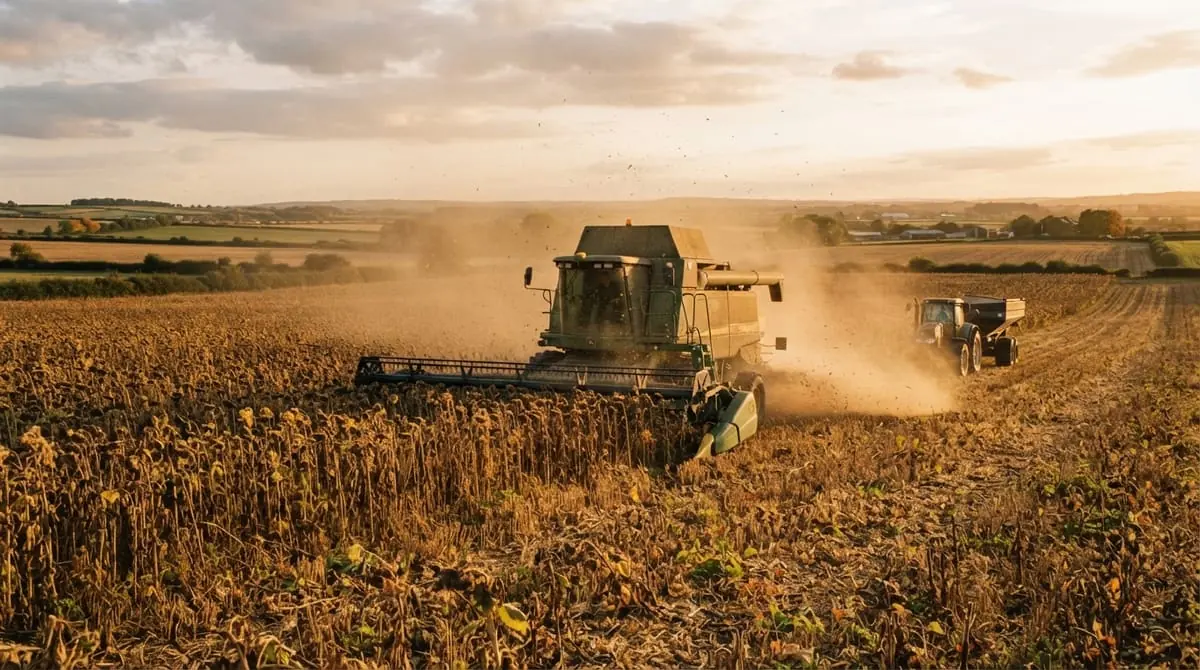
When Is Sunflower Harvest Season in Inner Mongolia?
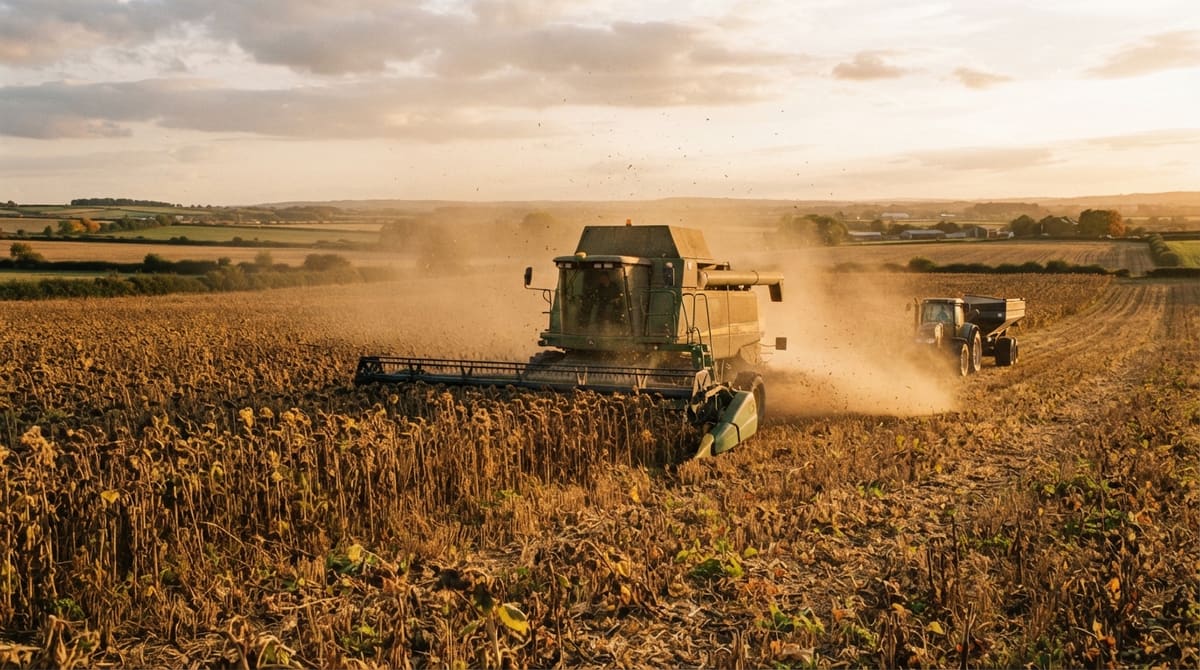
Planting and harvest dates depend on the region and the variety, so ask your supplier for the dates that apply to the seed you are buying.
Does Weather Variability Affect Availability Beyond the Normal Seasonal Pattern?
Yes, yield variability driven by weather during the growing season is a normal part of agricultural commodity markets generally, and a weaker or stronger harvest than the prior year can shift the whole year's pricing baseline independent of the usual within-year seasonal pattern. This is one reason experienced buyers track harvest conditions in the growing region, not just the calendar date, when planning order timing.
How Does Carryover Stock From the Previous Season Affect Pricing?
Carryover stock, inventory remaining from the previous season heading into a new harvest, acts as a buffer that can soften price swings if the new harvest is weaker than expected, or add downward pressure on price if carryover is unusually high alongside a strong new harvest. This is part of why pricing isn't purely a function of the current season's yield in isolation.
How Far in Advance Should Buyers Plan Around Harvest Timing?
If price timing matters to your budget, start conversations with your supplier a few months ahead of harvest season so you understand expected supply conditions before committing to an order date, waiting until you need product immediately removes any flexibility to time your purchase around the seasonal pattern.
Should Buyers Time Orders Around Harvest Season?
If timing flexibility matters for your budget, placing an order closer to post-harvest months can work in your favor on price, though quality and grade consistency shouldn't be sacrificed for timing alone. See our FOB pricing guide for the fuller set of factors that move price beyond seasonality.
Does the Chinese New Year Period Overlap With Harvest-Season Planning?
Not directly in timing, harvest falls in the autumn in many regions while Chinese New Year falls in late January or February, but the two do interact for a buyer planning a full annual order calendar. A buyer ordering close to harvest to capture favorable seasonal pricing, then needing a second order before the Chinese New Year factory-slowdown period begins, is effectively working around two separate seasonal constraints within the same few months, rather than one.
Buyers who place a single large annual order rather than several smaller ones often time it to land shortly after harvest specifically so that production, quality stabilization, and shipping can all be completed with buffer room before the Chinese New Year shutdown. Mapping both seasonal constraints onto a single calendar, rather than tracking them separately, makes it easier to spot where the two windows genuinely conflict for your specific order pattern, particularly if you're placing more than one order across a given year.
What Does the Export Calendar Show?
China's reported monthly exports show a seasonal shape. Across 2019 to 2024, January to March took 31% of annual volume on average, and the lowest month was September at 3.9% (UN Comtrade, HS 1206, calculated). The highest averages were 12.9% in January, 12.4% in November and 12.6% in December.
The pattern shows when goods were exported, not when seed was harvested or bought, and it covers all sunflower seed. It does suggest that the months after harvest are busy for shipments, so book production and freight early if you need seed in the first quarter.
How Should You Plan Around Harvest?
Treat harvest timing as a planning question to put to your supplier. Ask which crop year the seed in your quote is from, when the next crop is expected, and how that affects the shipment window you need.
What Should You Ask Your Supplier About Timing?
Ask three things: which crop year the quoted seed is from, how long the seed has been stored, and what shipment window the contract allows. XingYi Trading quotes FOB in metric tonnes, with the bag weight and the number of bags per container.
What Are the Limits of This Guide?
The export calendar comes from customs data that record when goods were exported, not when seed was harvested or sold. Harvest dates differ by region and year, so ask your supplier for availability.
Plan Your Order Timing
Request a quote and we'll confirm current availability and lead time for your target volume. Product details are on our products page, and the full buying process is in our bulk sunflower seeds buyer's guide.
Harvest timing is one input among several when you plan a purchase. Dates differ by region, variety and year, so treat any calendar as a general pattern, not a promise. Ask your supplier which crop year the seed in your quote comes from, and agree the shipment window in the contract so that both sides plan from the same dates. XingYi Trading supplies in-shell confection sunflower seed in three series: the 361 Series, the 363 Series and Tongqing No.6. See the bulk buyer's guide for the buying process.
Featured in This Article
Sourcing Sunflower Seeds for Your Business?
Contact XingYi Trading for pricing and samples (the buyer pays shipping) on our 361, 363, and TQ6 series.
Request a Quote
XingYi Trading
XingYi Trading — Bayannur, Inner Mongolia
More in Regional Markets
 Regional Markets
Sunflower Seed Export Statistics: Bayannur and China's Role in the Global Market
 Regional Markets
Bayannur, Inner Mongolia: Why China's Sunflower Capital Is China's Sunflower Seed Capital
 Regional Markets