
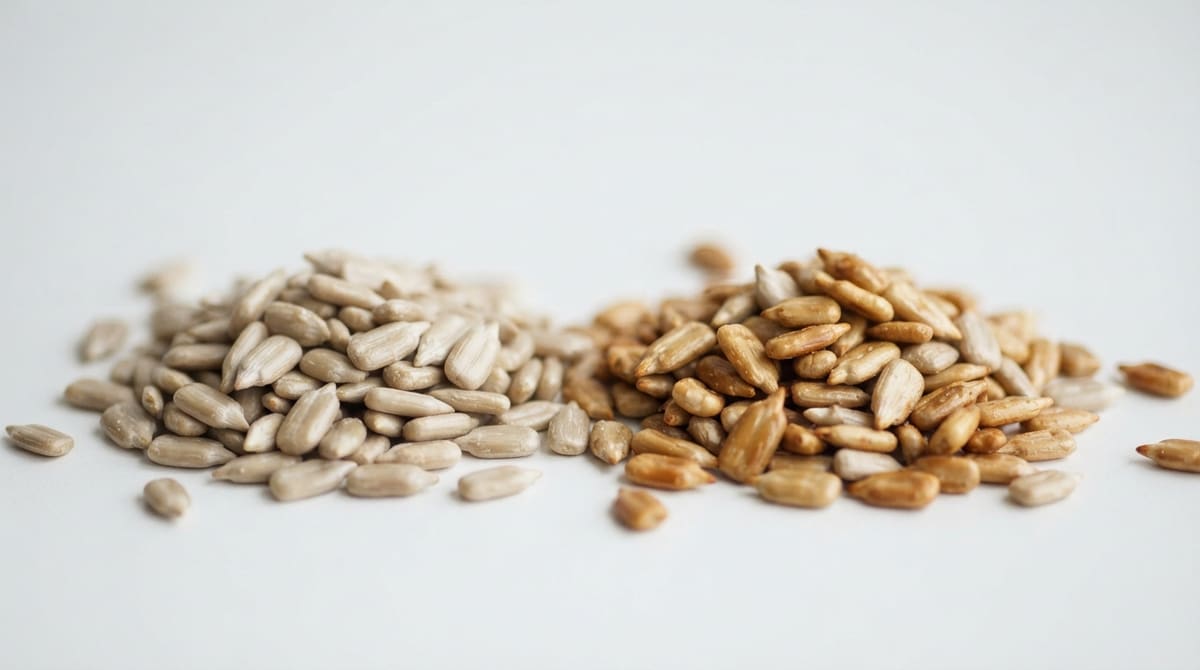
Raw vs. Roasted Sunflower Seeds: Which Form Do Bulk Buyers Need?
Shelf-life differences, processing tradeoffs, and which form makes more sense depending on whether you're private-labeling, redistributing, or reselling immediately.
- 1. Does Roasting Extend or Shorten Sunflower Seed Shelf Life?
- 2. Why Would a Bulk Buyer Choose Raw Seed?
- 3. Why Would a Bulk Buyer Choose Roasted Seed?
- 4. Does the Choice Affect Packaging Requirements?
- 5. Is There a Flavor or Quality Difference Buyers Should Know About?
- 6. Can You Test Both Forms Before Committing to a Bulk Order?
- 7. Does the Raw-vs-Roasted Decision Affect Documentation or HS Classification?
- 8. How Does This Choice Affect Storage and Logistics Planning?
- 9. Can You Order Both Raw and Roasted From the Same Supplier?
- 10. Does Roast Level (Light, Medium, Dark) Change These Tradeoffs Further?
- 11. Source Raw or Roasted Sunflower Seeds
Raw or roasted isn't just a flavor decision for a bulk buyer — it affects shelf life, how much processing control you retain, and how ready the product is for immediate resale. Here's how the two compare.
Does Roasting Extend or Shorten Sunflower Seed Shelf Life?
Counterintuitively, roasting shortens shelf life rather than extending it. Raw in-shell seed can last up to around two years in cool, dark, airtight storage, while raw hulled kernel keeps for roughly six months under good conditions. Roasted seed, by contrast, typically lasts only a few months at room temperature, because the roasting process alters the seed's structure in a way that exposes its natural oils to oxygen more readily, accelerating oxidative rancidity.
Why Would a Bulk Buyer Choose Raw Seed?
Raw, unprocessed seed gives a buyer more shelf-life runway and full control over roasting and seasoning downstream — useful if you're planning to private-label a flavored product or want to control freshness right up to the point of retail sale rather than relying on a supplier's roast date.
Why Would a Bulk Buyer Choose Roasted Seed?
Pre-roasted or flavored seed is more convenient for buyers planning immediate resale or redistribution without further processing — you're trading some shelf-life runway for a ready-to-sell product that doesn't require your own roasting operation.
Does the Choice Affect Packaging Requirements?
It can — because roasted seed is more exposed to oxidative rancidity, packaging with a stronger moisture and oxygen barrier (nitrogen-flushed or vacuum-sealed formats) matters more for roasted product than for raw. See our comparison of vacuum-sealed vs. standard export bags for how packaging format interacts with this.
Is There a Flavor or Quality Difference Buyers Should Know About?
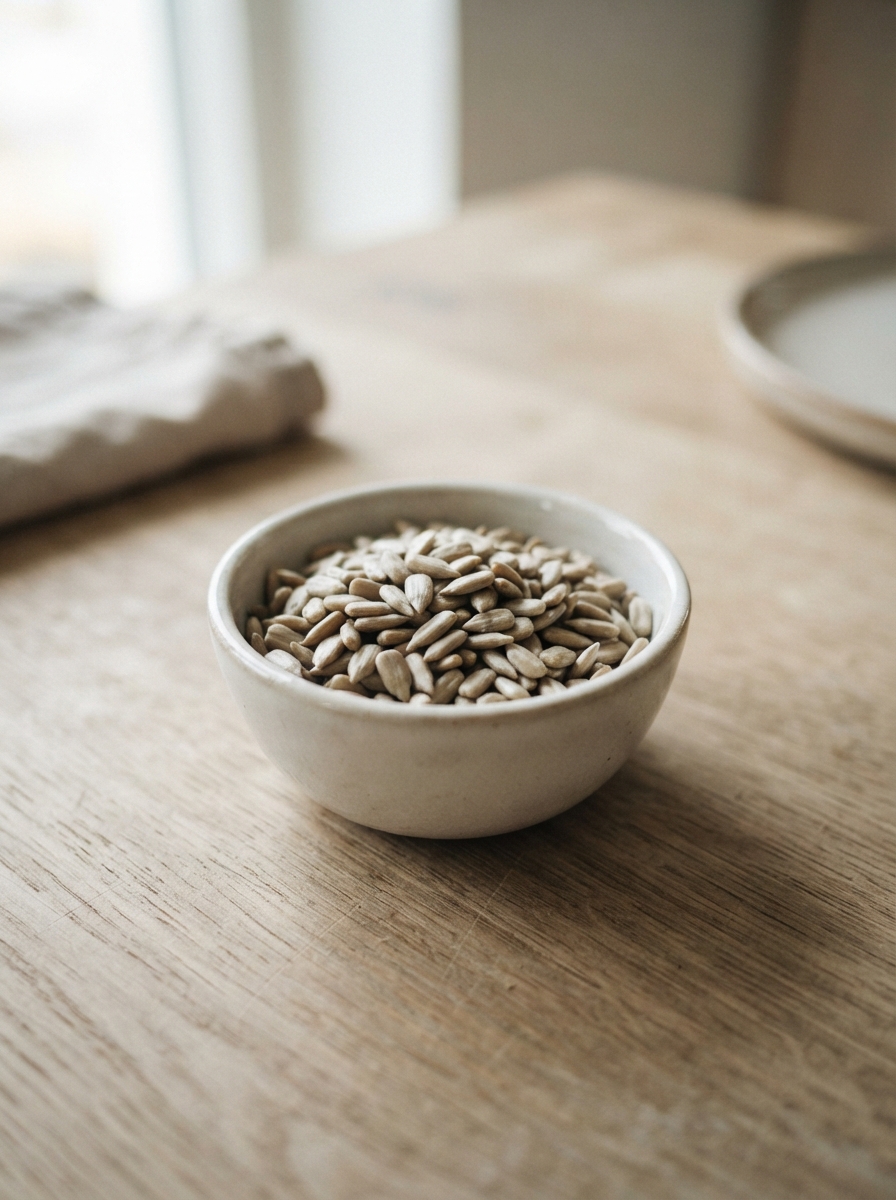
Roasting develops flavor through Maillard browning reactions that raw seed simply doesn't have, which is part of why roasted product commands a premium in some retail snacking markets. The core nutrient profile — vitamin E and mineral content per USDA's database — stays broadly similar between raw and roasted, though prolonged high-heat roasting can gradually reduce heat-sensitive vitamin E content. That flavor development is a genuine tradeoff against the shelf-life cost — neither form is objectively "better," the right choice depends entirely on what your product needs.
Can You Test Both Forms Before Committing to a Bulk Order?
Yes — requesting samples of both raw and roasted product is a reasonable step before finalizing which form to order in bulk, particularly if you're developing a new product line and haven't settled on a final specification yet. Comparing both directly against your own product plans is more reliable than deciding on paper alone.
Does the Raw-vs-Roasted Decision Affect Documentation or HS Classification?
Processing state (raw vs. roasted, in-shell vs. shelled) can affect exact HS subheading classification in some jurisdictions, so it's worth confirming with a customs broker how your chosen form is classified for your specific destination market. See our HS codes guide for more on how processing state factors into classification.
How Does This Choice Affect Storage and Logistics Planning?
If you're choosing roasted product, plan your inventory turnover with its shorter shelf life in mind — see our guide to sunflower seed shelf life for more detail on what affects it. If you're choosing raw product for later processing, our moisture content and purity standards guide covers what to look for in the raw material itself.
Can You Order Both Raw and Roasted From the Same Supplier?
Tell us which form fits your product plan when you request a quote, and we'll confirm what we can supply across 361, 363, and Tongqing No.6.
Does Roast Level (Light, Medium, Dark) Change These Tradeoffs Further?
Yes, incrementally — a darker roast pushes flavor development further but also shortens shelf life a bit more than a light roast, since more of the seed's structure has been altered by the extended heat exposure. This isn't usually the deciding factor between raw and roasted for a bulk order, but it's worth specifying alongside your raw/roasted decision if you already know your product's target flavor profile, rather than settling on roast level as an afterthought once the raw/roasted choice is made. Confirming your target roast level early also gives your supplier more lead time to test and dial in the exact result you're expecting, rather than adjusting after an initial sample misses the mark.
For buyers testing multiple roast levels against a specific recipe or product formulation, requesting samples across light, medium, and dark roast alongside raw seed gives a fuller picture than comparing just two data points, particularly if your end product's flavor profile is a key part of what differentiates it in the market. Keeping a record of which roast level tested best against your specific recipe also saves you from re-running the same comparison from scratch on a future reorder, especially if your supplier or production batch changes in the meantime.
Source Raw or Roasted Sunflower Seeds
Request a quote specifying raw or roasted, along with your target series and volume.
Featured in This Article
Sourcing Sunflower Seeds for Your Business?
Contact XingYi Trading for pricing, samples, and specification sheets on our 361, 363, and TQ6 series.
Request a Quote
James Feng
XingYi Trading — Bayannur, Inner Mongolia
More in Quality & Sourcing
 Quality & Sourcing
Do You Need a Third-Party Inspection for Your Sunflower Seed Order?
 Quality & Sourcing
How Buyers Verify They're Getting Real Confectionery Sunflower Seeds, Not Mislabeled Product
 Quality & Sourcing