
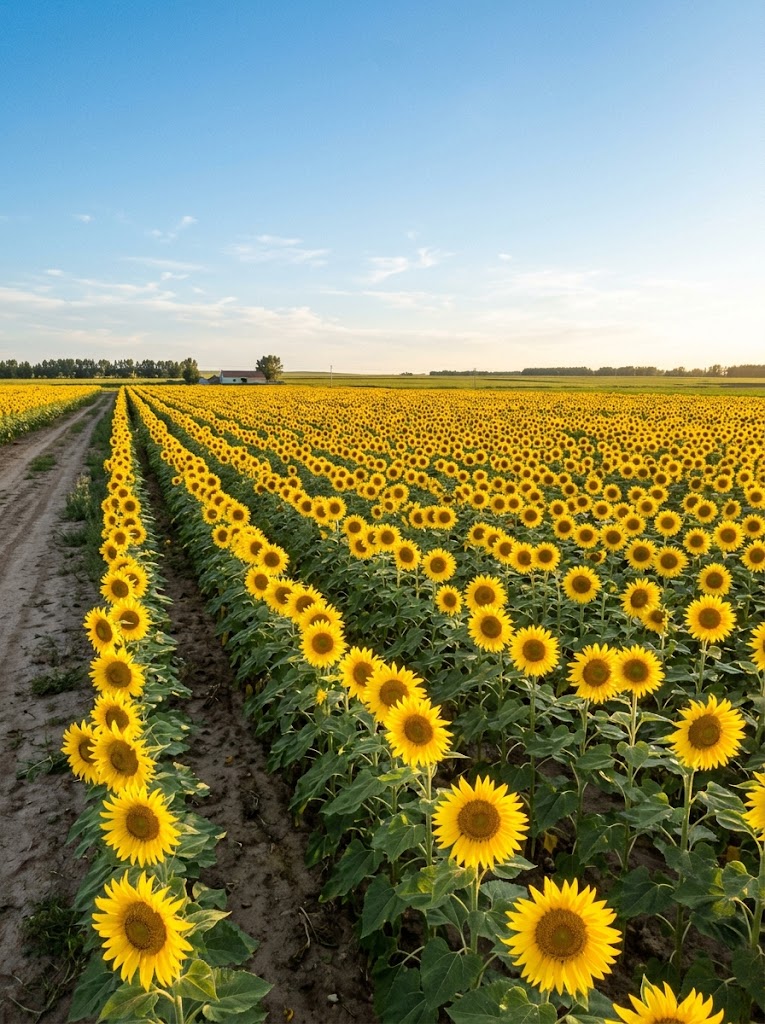
Sunflower Seed Festivals: Celebrating Nature's Golden Bounty
From the Wuyuan Sunflower Scenic Area to the International Sunflower Conference, sunflower seeds are a genuine cultural and economic celebration in Bayannur, Inner Mongolia.
- 1. Why Is Bayannur Home to So Many Sunflower Seed Festivals?
- 2. What Is the Wuyuan Sunflower Scenic Area?
- 3. What Other Cultural Traditions Surround the Sunflower Harvest in Bayannur?
- 4. What Is the International Sunflower Conference?
- 5. How Long Should You Roast Each Sunflower Seed Series?
- 6. What Happens at Bayannur's Culinary and Oil-Pressing Demonstrations?
- 7. What Are the Best Storage Tips From the Festival Circuit?
- 8. Is Bayannur the same region behind most sunflower seeds sold internationally?
- 9. From Local Festival to Global Export
In Bayannur, Inner Mongolia — China's largest sunflower-growing region — sunflower seeds are more than a crop. They're a fixture of local festivals, cooking competitions, and community events throughout the harvest season, and the scale behind those celebrations is genuinely substantial.
Why Is Bayannur Home to So Many Sunflower Seed Festivals?
Bayannur's scale as a sunflower-growing region is a big part of why the festival culture exists at all. Local reporting from People's Daily Online put the city's sunflower planting area at roughly 4.4 million mu (about 293,000 hectares) — nearly half of China's total sunflower planting area — with seed products exported to more than 40 countries, a scale confirmed in separate coverage of the region's export growth.
When a single crop underpins that much of a local economy, harvest-season festivals aren't just tourism events; they're a genuine community celebration of the year's work. Coverage of Bayannur's export growth puts sunflower-related exports at roughly 4.2 billion yuan annually — about 64% of the city's total agricultural export value — which is part of why the harvest carries the weight of a genuine civic celebration, not just a farming milestone.
What Is the Wuyuan Sunflower Scenic Area?
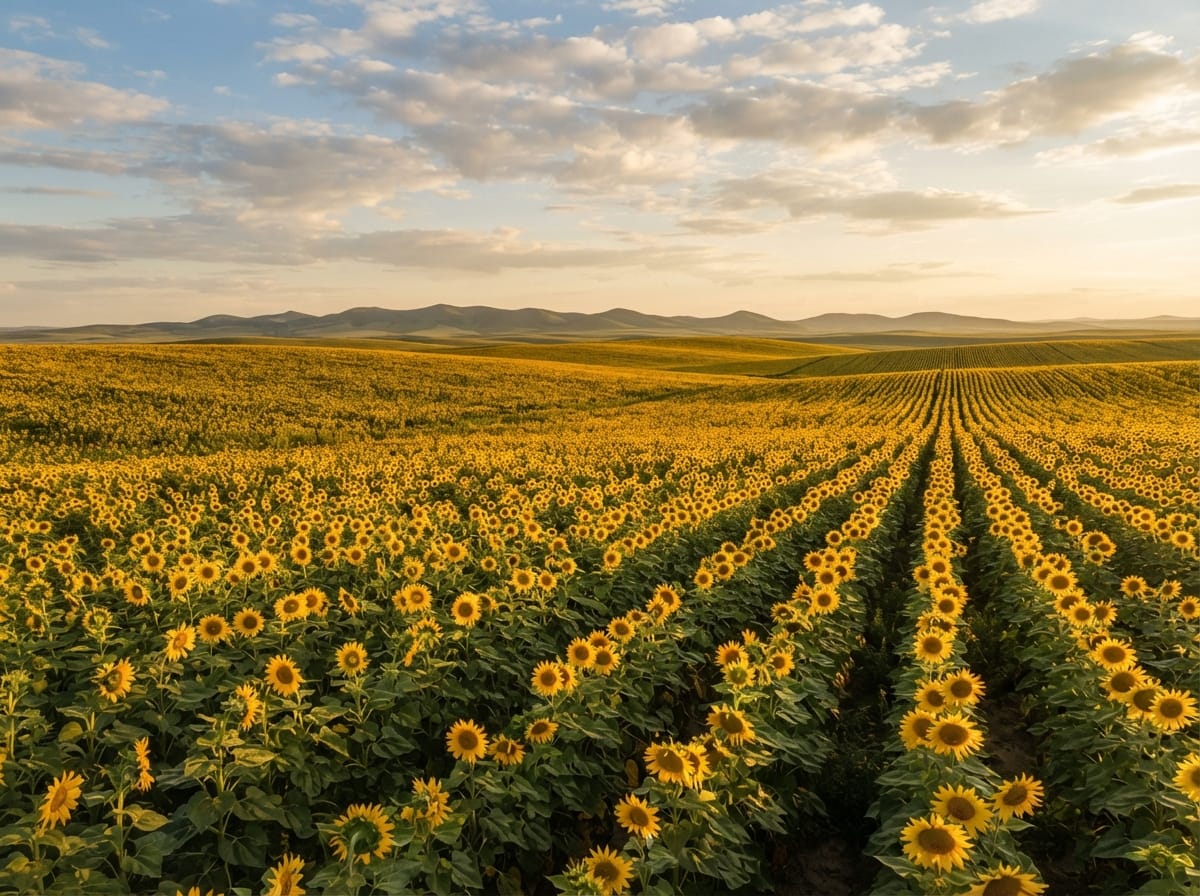
Wuyuan County, part of Bayannur, is known locally as the "hometown of sunflowers" — and it earns the name: it is China's single largest sunflower-planting county, accounting for roughly one-seventh of the national sunflower acreage (about 1.2 million mu), as regional reporting notes. From July through October each year, the blooming fields across the Hetao Irrigation Area draw a steady stream of visitors and photographers — the same window that runs from early flowering through to harvest.
The scenic area exists because the crop does: a working farm landscape that also happens to be worth visiting, rather than a tourist attraction built around agriculture as a backdrop.
What Other Cultural Traditions Surround the Sunflower Harvest in Bayannur?
We're based in Bayannur, so this part is what we see locally rather than anything you'll find in an export report. Beyond the scenic area and the international conference, harvest season carries a set of smaller, more local traditions that don't make international news coverage but shape daily life during the season. Family-run roadside stalls selling freshly roasted seeds appear throughout rural townships as harvest wraps up, often the first indication that a new crop year's seeds have reached market. Local cooking competitions, judged informally by community members rather than professional chefs, showcase regional variations on roasted and seasoned seeds passed down within families rather than published recipes.
Photography has also become its own minor seasonal industry around the blooming fields — professional and amateur photographers travel specifically for the bloom window, and several local businesses have grown up around renting traditional clothing for photos against the sunflower backdrop. None of this is centrally organized the way the Wuyuan Scenic Area or the International Sunflower Conference are; it's closer to how harvest festivals function in any agricultural region deeply tied to a single crop; small, distributed, and genuinely part of daily life rather than staged for visitors.
What Is the International Sunflower Conference?
Bayannur hosted the 21st International Sunflower Conference in Wuyuan County from August 20-24, 2024 — the sunflower industry's most authoritative academic gathering, held once every four years under the International Sunflower Association. Nearly 100 sunflower varieties from around the world were showcased alongside presentations from 10 internationally recognized researchers.
Hosting an event like this isn't just a cultural footnote — it reflects Bayannur's standing in the global sunflower industry as a place worth gathering growers, breeders, and researchers from around the world, not only a high-volume growing region.
How Long Should You Roast Each Sunflower Seed Series?
These are the roast times we recommend for our own three series, based on our processing experience — treat them as starting points and adjust to your equipment:
- •Light Roast (361 Series): 10-12 minutes
- •Medium Roast (363 Series): 13-15 minutes
- •Dark Roast (Tongqing No.6): 16-18 minutes
What Happens at Bayannur's Culinary and Oil-Pressing Demonstrations?
Local cooking demonstrations showcase the Tongqing No.6 series in salads and baked goods, prized for its rich flavor and plump kernels. Oil-pressing demonstrations walk through seed selection, cleaning, cold-pressing, filtration, and bottling — the same fundamentals behind our own processing line, just at a much larger scale for export.
What Are the Best Storage Tips From the Festival Circuit?
- •Use airtight containers
- •Store in a cool, dry location away from direct sunlight
- •Refrigerate or freeze for extended storage — 3 to 6 months is optimal
Is Bayannur the same region behind most sunflower seeds sold internationally?
Bayannur is one of the largest single sources, given its share of China's total sunflower planting area, but it isn't the only one — other regions in China and countries including Russia, Ukraine, and Argentina are major sunflower producers as well. What sets Bayannur apart is the concentration of both growing and processing infrastructure in one area, which is part of why so many exporters, including XingYi Trading, are based there.
From Local Festival to Global Export
The same seeds celebrated at these local festivals are the ones that end up in export containers bound for snack brands and distributors abroad. Our 361, 363, and Tongqing No.6 series pages cover the specific grades that come out of this region, and our About page covers XingYi Trading's own history operating out of Bayannur since 2014. For sourcing inquiries, request a quote directly, or browse our blog for more on how these seeds are grown, harvested, and used.
Featured in This Article
Sourcing Sunflower Seeds for Your Business?
Contact XingYi Trading for pricing, samples, and specification sheets on our 361, 363, and TQ6 series.
Request a Quote
James Feng
XingYi Trading — Bayannur, Inner Mongolia