
Confectionery vs. Oil-Type Sunflower Seeds: Why the Distinction Matters for Buyers
The real agricultural and industry distinction between confectionery and oil-type sunflower seeds — and why it matters when you're sourcing for a snack or food product.
- 1. What's the Difference Between Confectionery and Oil-Type Sunflower Seeds?
- 2. Why Does This Distinction Matter for Buyers?
- 3. What Sub-Classes Exist Within Confectionery Sunflower Seed?
- 4. Are Oil-Type Sunflower Seeds Also Divided Into Sub-Types?
- 5. Is a Sunflower "Seed" Actually a Botanical Seed?
- 6. Can a Single Farm Grow Both Types?
- 7. How Can a Buyer Verify Which Type They're Actually Being Offered?
- 8. Does XingYi Trading Supply Oil-Type Sunflower Seeds or Sunflower Oil?
- 9. Is Confectionery Sunflower a Smaller Market Than Oil-Type Globally?
- 10. Source Confectionery Sunflower Seeds
Not all sunflower seeds are grown for the same purpose, and confusing the two types can lead to sourcing the wrong product entirely. Here's the actual agricultural distinction between confectionery and oil-type sunflower, and why it matters for buyers.
What's the Difference Between Confectionery and Oil-Type Sunflower Seeds?
According to the Northern Crops Institute and the USDA's Agricultural Marketing Resource Center, the two types differ across several dimensions:
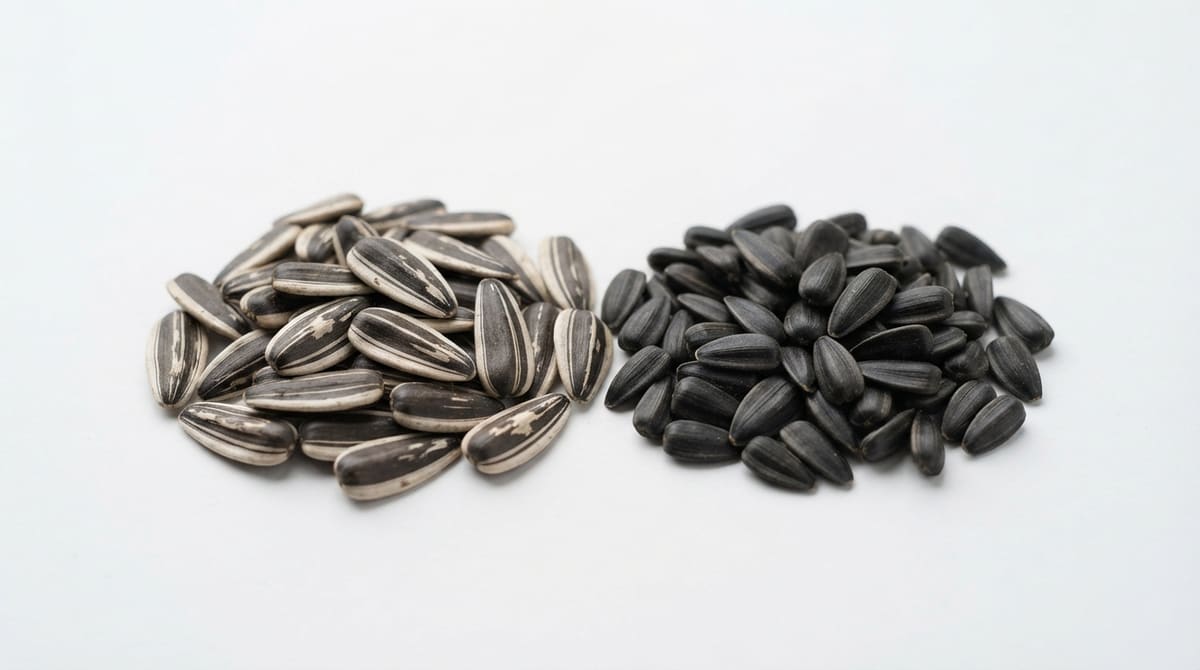
- •Shell appearance — confectionery seeds have a striped black-and-white shell; oil-type seeds have a smaller, solid black shell
- •Size — confectionery seeds are larger and plumper; oil-type seeds are smaller
- •Shell thickness — confectionery shells are thicker, protecting the kernel for whole-seed snacking; oil-type shells are thinner, easing oil extraction
- •Oil content — oil-type seeds run considerably higher in oil percentage; confectionery seeds are bred for kernel size and eating quality, not oil yield
Why Does This Distinction Matter for Buyers?
A supplier of oil-type sunflower isn't necessarily a supplier of confectionery-type, and vice versa — the two are bred, grown, and processed differently because they're bred for entirely different end uses. If your product is a whole-seed snack, a bakery inclusion, or a garnish, you need confectionery-type seed; if you're sourcing an oil ingredient for cosmetics or cooking oil, that's a different crop and a different supplier relationship entirely. We've covered this distinction before in the context of sunflower seed oil in cooking and cosmetic/hair-care use — both articles clarify that the oil ingredient discussed there comes from oil-type cultivars, a different crop from XingYi's own confectionery catalog.
What Sub-Classes Exist Within Confectionery Sunflower Seed?
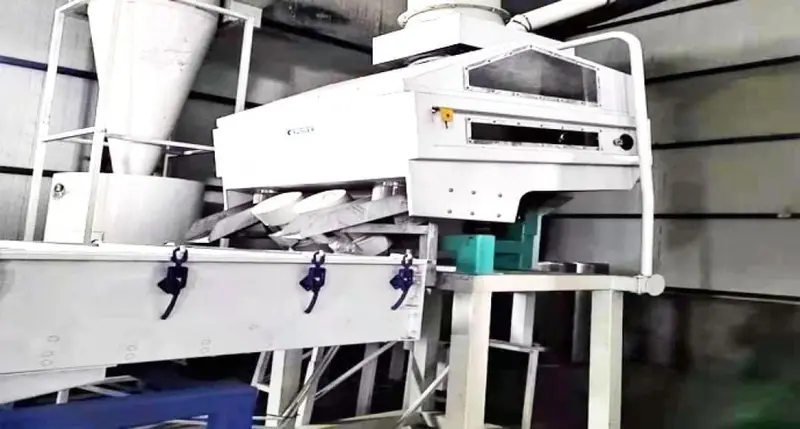
Confectionery sunflower is generally sorted into in-shell (roasted or salted for direct snacking, larger/jumbo grades), kernel (dehulled, medium size), and smaller grades used for other purposes. Our 361, 363, and Tongqing No.6 series fall within this confectionery category, differentiated mainly by kernel size and positioning rather than by oil content.
Are Oil-Type Sunflower Seeds Also Divided Into Sub-Types?
Yes — oil-type sunflower hybrids are generally split into linoleic (the traditional, regular-oil type), NuSun (a mid-oleic variant), and high-oleic classes, each bred for a different fatty-acid profile suited to different industrial and food-oil uses. This is a separate breeding program entirely from confectionery sunflower, reinforcing that oil-type and confectionery-type aren't just two grades of the same crop — they're different breeding lines bred toward different goals from the outset.
Is a Sunflower "Seed" Actually a Botanical Seed?
Not technically — what's commonly called a sunflower seed (in its shell) is botanically a cypsela, a type of dry, one-seeded fruit characteristic of the Asteraceae (daisy) plant family that sunflowers belong to. This is a minor point but worth knowing if you ever need to discuss classification with a customs official or lab using precise botanical terminology.
Can a Single Farm Grow Both Types?
It's possible in principle, but in practice growers generally specialize in one type or the other, since the two are bred for different agronomic goals and often require different downstream buyers and processing infrastructure. A region known for confectionery production — like Bayannur — has built its processing and trading infrastructure specifically around that type, which is part of why sourcing confectionery seed from an established confectionery-focused region and supplier matters.
How Can a Buyer Verify Which Type They're Actually Being Offered?
Shell appearance is the most immediate visual check — striped black-and-white shells indicate confectionery type, while smaller, solid black shells indicate oil type — but for a bulk order, requesting a sample and confirming the specific cultivar or grade with your supplier in writing is the more reliable approach than relying on appearance alone from a photo.
Does XingYi Trading Supply Oil-Type Sunflower Seeds or Sunflower Oil?
No — XingYi Trading grows and exports whole, in-shell confectionery sunflower seeds only. If your business is sourcing an oil ingredient rather than a whole seed for snacking, retail, or food-service use, you'll want a supplier specializing in oil-type cultivars instead.
Is Confectionery Sunflower a Smaller Market Than Oil-Type Globally?
Yes — oil-type sunflower accounts for the large majority of global sunflower acreage, since it feeds a much larger downstream market (cooking oil, industrial and food-oil applications) than whole-seed snacking does. Confectionery-type is a genuine specialty within the broader sunflower category, grown by a smaller set of regions and suppliers that have built the specific agronomic expertise and processing infrastructure the crop requires.
That smaller scale isn't a disadvantage for a buyer — it means confectionery-focused regions like Bayannur have developed deep specialization in exactly this crop, rather than treating it as a minor sideline to a much larger oil-type operation. A supplier whose core business is confectionery seed, rather than one for whom it's an occasional secondary product, generally has more consistent grading infrastructure and processing experience specific to whole-seed quality.
Source Confectionery Sunflower Seeds
If you're sourcing whole seeds for snacking, retail, or food-service use, request samples and a specification sheet across our 361, 363, or Tongqing No.6 series.
Featured in This Article
Sourcing Sunflower Seeds for Your Business?
Contact XingYi Trading for pricing, samples, and specification sheets on our 361, 363, and TQ6 series.
Request a Quote
James Feng
XingYi Trading — Bayannur, Inner Mongolia
More in Quality & Sourcing
 Quality & Sourcing
Do You Need a Third-Party Inspection for Your Sunflower Seed Order?
 Quality & Sourcing
How Buyers Verify They're Getting Real Confectionery Sunflower Seeds, Not Mislabeled Product
 Quality & Sourcing