
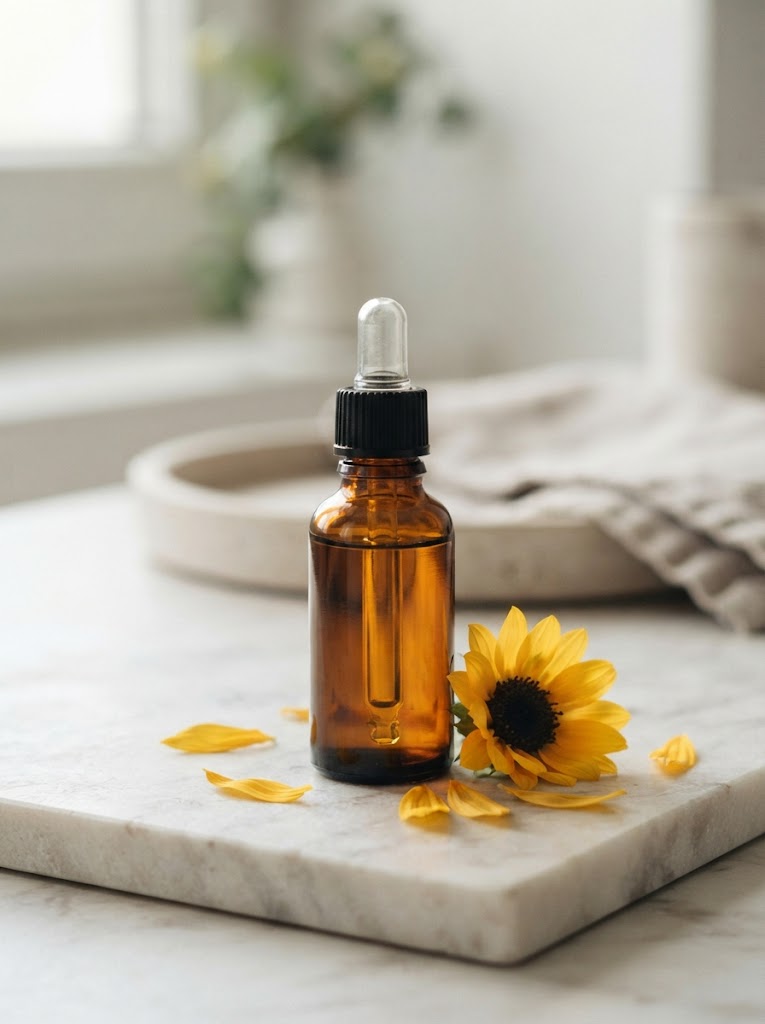
Sunflower Seeds in Beauty: Cosmetics, Skincare, and Hair Care
From vitamin-E-rich oil to biodegradable exfoliants and hair conditioning — sunflower seeds have a growing, well-documented role in skincare, hair care, and natural cosmetics formulation.
- 1. What Are the Benefits of Sunflower Seed Oil for Skin?
- 2. How Is Sunflower Seed Oil Used in Skincare and Exfoliation?
- 3. How Is Sunflower Seed Oil Used in Hair Care?
- 4. Does the Research Support Sunflower Seed Oil's Hair Care Claims?
- 5. Can Sunflower Seeds Be Used as Natural Colorants?
- 6. Is Cosmetic-Grade Sunflower Oil the Same as Confectionery Sunflower Seeds?
- 7. Is sunflower seed oil comedogenic or likely to cause breakouts?
- 8. What's the difference between refined and cold-pressed sunflower oil for cosmetics?
- 9. Looking for Whole Sunflower Seeds Instead of Oil?
Beyond snacking, sunflower seeds are a valuable raw material for the beauty industry — and it's an ingredient with real, well-documented dermatological research behind it, not just marketing appeal. Worth noting upfront: the oil used in cosmetic formulations is typically pressed from oil-type sunflower cultivars grown specifically for oil content. That's a different crop from the confectionery, in-shell 361, 363, and Tongqing No.6 seeds XingYi Trading exports for snacking, retail, and food-service use — this article covers the industry and the ingredient generally, not a product XingYi supplies. See our full breakdown of the confectionery-vs-oil-type distinction for more on why the two aren't interchangeable from a sourcing standpoint.
What Are the Benefits of Sunflower Seed Oil for Skin?
- •Rich in vitamin E, a well-known antioxidant
- •High in linoleic acid for hydration
- •Light, non-greasy texture suited to facial products
- •Natural emollient properties for creams and lotions
How Is Sunflower Seed Oil Used in Skincare and Exfoliation?
Linoleic acid supports hydration, vitamin E offers anti-aging properties, oleic acid supports the skin barrier, and B-complex vitamins provide soothing effects. A controlled study cited in cosmetic ingredient safety documentation found that sunflower seed oil helped preserve skin barrier integrity and reduce water loss, and the ingredient (listed as Helianthus Annuus Seed Oil under INCI naming) has been reviewed and confirmed safe for cosmetic use by the Cosmetic Ingredient Review Expert Panel.
Ground sunflower seeds are also used as a biodegradable alternative to plastic microbeads, offering gentle exfoliation without the environmental cost. That distinction matters more than it used to: the FDA's Microbead-Free Waters Act has prohibited plastic microbeads in rinse-off cosmetics in the United States since 2017, which has pushed formulators toward natural exfoliants like ground seed hulls as a direct replacement.
How Is Sunflower Seed Oil Used in Hair Care?
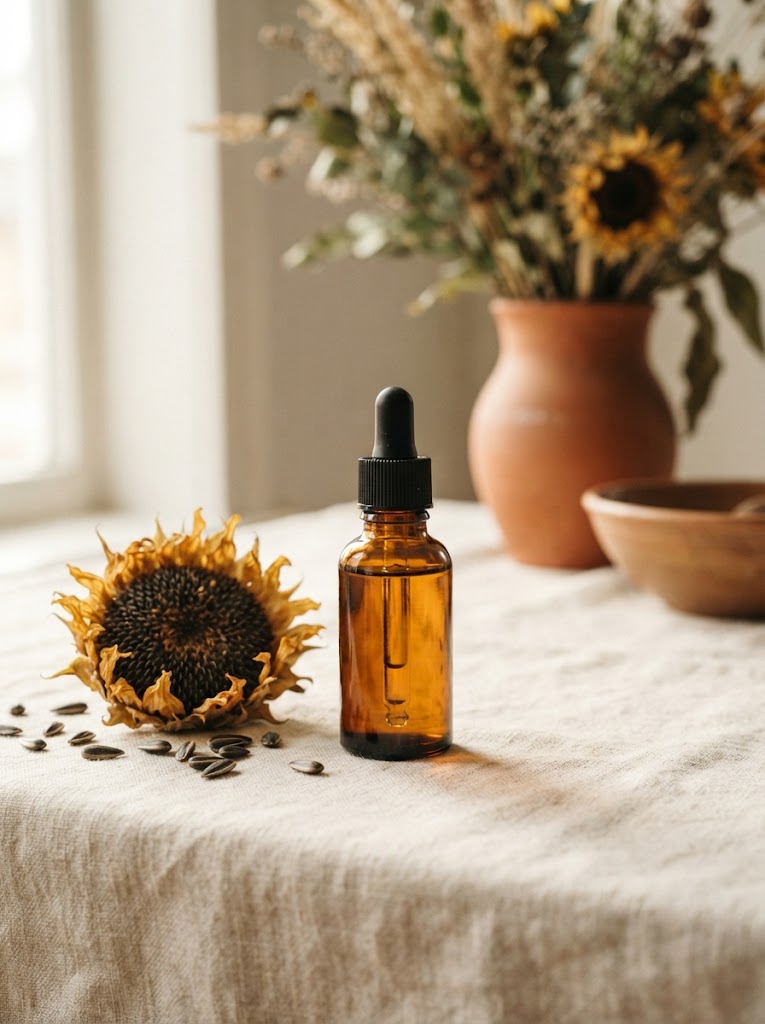
Sunflower seed oil has a growing following as a natural hair care ingredient — light enough for daily use, but rich in the fatty acids and antioxidants that support scalp and strand health. It works as a lightweight emollient that coats and smooths the hair shaft rather than changing the hair's biology.
We don't present it as a hair-growth or color-protection treatment: there's no reliable clinical evidence that topical sunflower oil regrows hair or prevents color fade, so we've left those popular DIY claims out.
- •Deep conditioning — mix with honey and lavender essential oil, apply for 30 minutes before shampooing
- •Scalp comfort — a gentle massage 2-3 times weekly can ease the feeling of a dry, flaky scalp
- •Frizz control — a few drops on damp hair before styling coats and smooths the cuticle
- •Split-end appearance — 2-7 drops (by hair length) temporarily smooth how split ends look; the oil coats rather than repairs them, and the effect washes out at the next shampoo
Does the Research Support Sunflower Seed Oil's Hair Care Claims?
Vitamin E and fatty acids give sunflower seed oil natural conditioning properties, while its light texture means it absorbs without weighing hair down. The antioxidant mechanism has some real research behind it: vitamin E helps counter oxidative stress in the scalp, a factor researchers have linked to hair thinning, and a clinical trial published in Tropical Life Sciences Research found that participants taking a vitamin-E-family supplement (tocotrienols) over eight months saw a meaningfully higher hair count than a placebo group.
That study used an oral supplement rather than a topical oil, so the mechanism — reducing oxidative stress — is the relevant takeaway rather than a direct claim about scalp application. Sunflower seed oil sits in the same general category as argan or jojoba oil for hair use — a light, non-comedogenic carrier oil rather than a heavy sealant like coconut oil.
Can Sunflower Seeds Be Used as Natural Colorants?
Beyond conditioning, sunflower seeds also lend golden-yellow hues to eyeshadows, lip balm tints, and bronzers, alongside their more common use as an oil-extraction source.
Is Cosmetic-Grade Sunflower Oil the Same as Confectionery Sunflower Seeds?
No — oil-type and confectionery-type sunflower are bred, grown, and processed differently. Oil-type cultivars are bred for maximum oil yield per seed, while confectionery types like XingYi's are bred for kernel size, appearance, and eating quality, so a supplier of one isn't necessarily a supplier of the other.
If your interest is in whole, in-shell sunflower seeds for a snack, retail, or food-service product rather than an oil ingredient, see our Capabilities section for how those seeds are inspected and processed.
Is sunflower seed oil comedogenic or likely to cause breakouts?
Sunflower seed oil is generally considered low on the comedogenic scale, which is part of why it shows up in facial formulations rather than being reserved for body products only. As with any oil-based ingredient, individual skin response varies, and a formulator would typically patch-test a new blend before full production.
What's the difference between refined and cold-pressed sunflower oil for cosmetics?
Cold-pressed, unrefined oil retains more of its natural vitamin E and a fuller scent profile, which formulators often prefer for leave-on skincare and hair products. Refined oil has a lighter scent and longer shelf stability, which can matter more for large-batch commercial production. Both come from the same kernel — the difference is entirely in processing, not the raw material.
Looking for Whole Sunflower Seeds Instead of Oil?
XingYi Trading doesn't process or supply sunflower oil — we grow and export whole, in-shell confectionery sunflower seeds. If your business is sourcing whole seeds for snacking, retail, or food-service use rather than an oil ingredient, browse our 361, 363, and Tongqing No.6 series, or request samples and a specification sheet directly.
Sourcing Sunflower Seeds for Your Business?
Contact XingYi Trading for pricing, samples, and specification sheets on our 361, 363, and TQ6 series.
Request a Quote
James Feng
XingYi Trading — Bayannur, Inner Mongolia