

How to Write an RFQ for Bulk Sunflower Seeds That Gets a Fast, Accurate Quote
The specific details that let a supplier quote accurately on the first try, instead of a slow back-and-forth of clarifying questions before you get a real number.
- 1. What Should a Sunflower Seed RFQ Include?
- 2. Why Does Specifying Series and Grade Matter in Your RFQ?
- 3. Should You Request Pricing at Multiple Volume Tiers?
- 4. What Destination and Incoterm Details Does a Supplier Need?
- 5. How Much Lead Time Should You Give Suppliers to Respond?
- 6. What's the Biggest Mistake Buyers Make When Writing an RFQ?
- 7. Should You Send the Same RFQ to Multiple Suppliers at Once?
- 8. What Happens After You Submit an RFQ to XingYi Trading?
- 9. Should an RFQ Include a Deadline for Suppliers to Respond?
- 10. Is It Worth Including Your Intended Use Case in an RFQ?
- 11. Ready to Send Your RFQ?
A vague RFQ gets a vague answer — or a round of clarifying emails before a supplier can quote at all. Sourcing guidance on RFQ best practices is consistent on this point: the more specific the request, the more accurate and comparable the quotes that come back. Here's what to include in an RFQ for a bulk sunflower seed order.
What Should a Sunflower Seed RFQ Include?
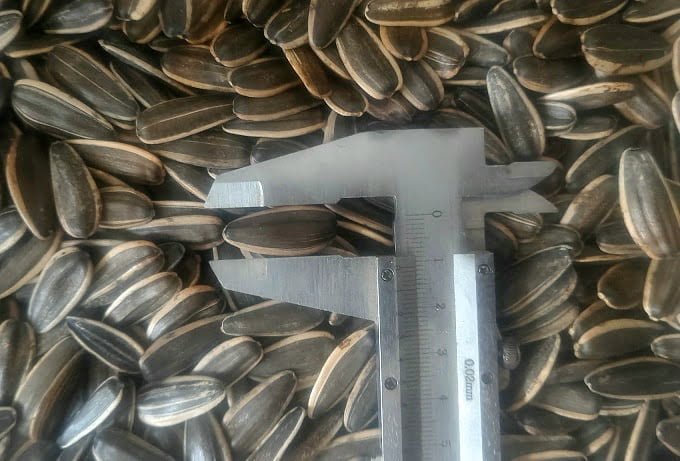
- •Target series — 361, 363, or Tongqing No.6, or ask for pricing across all three if you haven't decided
- •Form — in-shell or kernel, raw or roasted
- •Target volume — and whether you're testing with a trial/sample order or planning a full container
- •Destination country and port
- •Preferred Incoterm — FOB, CIF, or another arrangement, if you already have a preference
- •Target timeline — when you'd need the first shipment to arrive
- •Intended use — retail, food-service, further processing, or redistribution
Why Does Specifying Series and Grade Matter in Your RFQ?
361, 363, and Tongqing No.6 differ in kernel size and market positioning, and quoting the wrong one wastes a round trip. If you're not sure which series fits your product yet, say so directly in the RFQ and ask for pricing across all three rather than guessing — a supplier would rather quote three lines once than requote after you realize the first one was wrong for your use case.
Should You Request Pricing at Multiple Volume Tiers?
Yes — asking for pricing at two or three volume levels (for example, a trial LCL quantity and a full container quantity) in the same RFQ lets you see the per-ton discount curve and gives you a clearer basis for negotiation, without needing to send a second request later. General RFQ guidance recommends this specifically for sourcing decisions where volume isn't fully locked in yet.
What Destination and Incoterm Details Does a Supplier Need?

At minimum, the destination country and port of entry — port-to-port freight cost varies enough that a supplier can't quote CIF or a landed estimate without it. If you already know which Incoterm you want, state it; if you're not sure yet, ask the supplier to quote both FOB and CIF, per the ICC's official Incoterms rules, so you can compare what each includes before deciding.
How Much Lead Time Should You Give Suppliers to Respond?
For a first-time RFQ, a few business days is typically enough for a supplier to put together a straightforward quote on standard product — this isn't a complex custom-manufacturing RFP requiring weeks of internal costing. If your request includes a custom packaging spec or a large volume that needs production scheduling, allow more time and say so upfront so the supplier can set expectations rather than rushing an estimate.
What's the Biggest Mistake Buyers Make When Writing an RFQ?
Leaving out the destination and volume and just asking "what's your price?" FOB and landed prices vary by port, volume tier, and packaging format — a supplier answering that question without specifics either has to guess (and requote later once you clarify) or send a generic price list that doesn't reflect your actual order. A few extra lines in the initial email saves a full round trip.
Should You Send the Same RFQ to Multiple Suppliers at Once?
Yes, and it's standard practice — sending an identical, specific RFQ to several suppliers is the most reliable way to get comparable quotes, since you're comparing apples to apples rather than piecing together quotes that came from different follow-up conversations with different levels of detail. Keep a copy of the RFQ text you sent so you can confirm every quote you get back is actually responding to the same request.
What Happens After You Submit an RFQ to XingYi Trading?
Our team reads the actual details in your request — series, volume, destination, timeline — and follows up with current pricing and specifications matched to what you asked for, not a generic price sheet. If anything in your RFQ is ambiguous, we'll ask a clarifying question rather than guess.
Should an RFQ Include a Deadline for Suppliers to Respond?
Yes — stating a specific response deadline, even a generous one, helps suppliers prioritize your request appropriately and gives you a clear point to follow up if you haven't heard back. Without a stated deadline, a supplier may reasonably treat your RFQ as lower priority than one with an explicit timeline attached.
Is It Worth Including Your Intended Use Case in an RFQ?
Yes — whether you're sourcing for retail packaging, food-service redistribution, or further processing affects which series and packaging format actually fits your needs, and a supplier who understands the end use can proactively flag considerations you might not think to ask about. This context takes one extra sentence and often improves the relevance of the response you get back.
Ready to Send Your RFQ?
Use our quote form — it's built around the same fields covered above, so filling it in completely gets you a fast, accurate response.
Featured in This Article
Sourcing Sunflower Seeds for Your Business?
Contact XingYi Trading for pricing, samples, and specification sheets on our 361, 363, and TQ6 series.
Request a Quote
James Feng
XingYi Trading — Bayannur, Inner Mongolia
More in Importing & Trade
 Importing & Trade
T/T vs. Letter of Credit: Choosing Payment Terms for a Sunflower Seed Import Order
 Importing & Trade
FOB, CIF, and Incoterms Explained for First-Time Sunflower Seed Importers
 Importing & Trade